
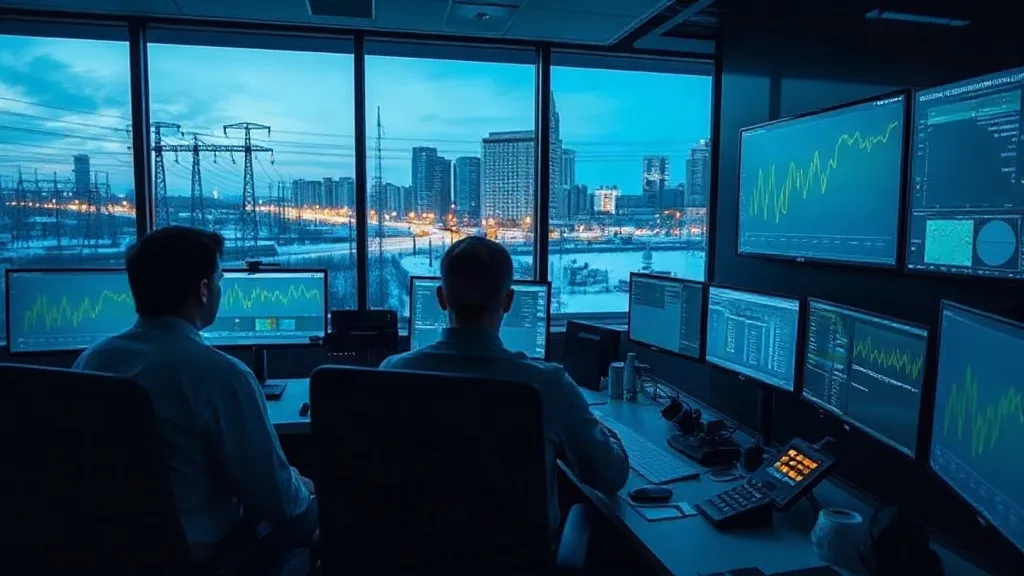
As the UK braces for another winter of high energy prices and geopolitical tension, the National Energy System Operator (NESO) has moved to calm fears that the country could face power cuts. The operator, which took over responsibility for keeping the lights on from National Grid ESO earlier this year, stated that electricity supply will be sufficient to meet demand. But the assurance comes against a backdrop of unease among its own engineers, who have reportedly expressed doubts about their ability to guarantee adequate supply under stress conditions. The announcement offers relief to households and businesses, yet it also raises questions about the resilience of the UK's energy system as it transitions to greener sources.
What the grid operator actually said
In a statement released this week, NESO confirmed that its winter outlook shows enough generation capacity to cover expected demand. The operator pointed to a mix of measures, including additional reserve capacity, demand-side response schemes, and improved interconnector availability, as reasons for confidence. It also noted that it has secured extra tools to manage potential tight spots, such as the ability to pay large consumers to reduce usage during peak hours. However, the statement did not disclose specific capacity margins or worst-case scenarios, leaving some industry watchers wanting more detail.
The core message, though, was clear: the lights will stay on this winter. For a public still scarred by the energy crisis of 2022, when wholesale gas prices spiked and fears of blackouts loomed, that reassurance is welcome. But the caveat is that this confidence rests on assumptions about weather, fuel prices, and infrastructure performance that could change.
Why engineers are worried
According to sources close to the operator, some engineers have voiced concerns about the system's ability to cope with simultaneous stresses. These could include a prolonged cold snap that drives up heating demand, combined with low wind output and an unplanned outage at a major power station or interconnector. While such events are rare, their impact could be severe, and the margin for error is thinner than it once was.
The UK's generation mix has shifted dramatically over the past decade. Coal, which once provided a reliable baseload, has been phased out entirely. Gas remains important but is subject to global market fluctuations. Renewables now account for a significant share of capacity, but their output is variable. Nuclear provides steady output but is aging, with several plants due to retire in the coming years. The result is a system that is cleaner but more complex to manage, and that complexity is what keeps engineers up at night.
One industry veteran, speaking on condition of anonymity, said: "We're running the system closer to the edge than we used to. It's not that we can't keep the lights on, but the number of things that have to go right is higher." This sentiment is not isolated. It reflects a broader anxiety about the pace of change and the tools available to manage it.
The bigger picture: a system in transition
The UK's energy transition is one of the most ambitious in the world. The government aims to decarbonize the power system by 2035, which means relying even more on wind, solar, and nuclear, while scaling up technologies like battery storage and hydrogen. That vision requires not just new generation but also a smarter, more flexible grid. NESO is at the heart of this transformation, tasked with balancing supply and demand in real time while planning for the future.
Part of the challenge is that the grid was designed for a different era, when power flowed one way from large central stations to consumers. Today, power flows both ways, with millions of small-scale generators like rooftop solar and batteries feeding into the network. Managing this two-way flow requires advanced forecasting, real-time data, and sometimes curtailing generation to avoid overloads. These are solvable problems, but they require investment and coordination.
Another factor is the increasing interconnection with neighboring countries. The UK now has links to France, the Netherlands, Belgium, and Norway, allowing it to import power when domestic supply is tight or export when there's surplus. These cables enhance security of supply but also expose the UK to price spikes and outages on the continent. The operator must factor in the availability of these links when assessing winter resilience.
What it means for households and businesses
For most people, the assurance from NESO means they can plan their winter without the specter of planned blackouts. That's particularly important for vulnerable households and for businesses that rely on continuous power, such as manufacturers and data centers. However, it does not mean energy bills will be low. Wholesale prices remain volatile, and the cap on domestic prices, while protective, still leaves many struggling.
Businesses should also note that the operator's confidence does not eliminate the risk of temporary disruptions. Extreme weather events, such as storms, can cause local outages, and the grid's aging infrastructure occasionally fails. Companies with critical operations may want to review their backup plans, including generators and uninterruptible power supplies. The operator's demand flexibility schemes also offer opportunities for businesses to earn revenue by reducing consumption during peak times, a win-win for those able to participate.
For the broader economy, a stable electricity supply is essential. The UK's productivity and competitiveness depend on reliable power. The fact that the operator is publicly confident is a positive signal to investors and international partners. But the underlying concerns among engineers serve as a reminder that the energy transition must be managed carefully to avoid shocks.
What to watch in the coming months
As winter progresses, several indicators will reveal how well the system is holding up. The first is the weather: a prolonged cold spell would test the grid's limits. The second is wind output: low wind periods, known as dunkelflaute, can last for days and strain supply. The third is the availability of interconnectors: if one or more links go down, the UK may need to rely more on domestic generation. The operator will be monitoring these factors closely and may issue alerts if margins tighten.
NESO is also expected to publish more detailed data on its winter preparations, including the results of its capacity auctions and the status of demand-side response contracts. Transparency will be key to maintaining public trust. The operator has promised to keep stakeholders informed, but only time will tell if its assurances hold up under pressure.
FAQs
Will there be power cuts this winter in the UK?
According to the National Energy System Operator, the UK has sufficient electricity supply to meet demand this winter, so widespread power cuts are not expected. However, local outages due to weather or equipment failures can still occur.
Why are engineers concerned about the grid?
Engineers worry about the grid's ability to handle simultaneous stresses, such as extreme cold, low wind, and unplanned outages. The transition to renewable energy has made the system more complex to manage, and the margin for error has narrowed.
What is NESO and what does it do?
NESO stands for National Energy System Operator. It is the body responsible for balancing electricity supply and demand in real time, ensuring the grid remains stable, and planning for future energy needs. It took over from National Grid ESO in 2024.
How can businesses prepare for potential energy disruptions?
Businesses should review their backup power plans, consider participating in demand flexibility schemes, and stay informed about grid alerts. Having a contingency plan for temporary outages can help minimize disruption.
What is the UK doing to improve energy security?
The UK is investing in renewable generation, battery storage, interconnectors, and smart grid technologies. It is also reforming the electricity market to attract investment and ensure the system can cope with the transition to net zero.