
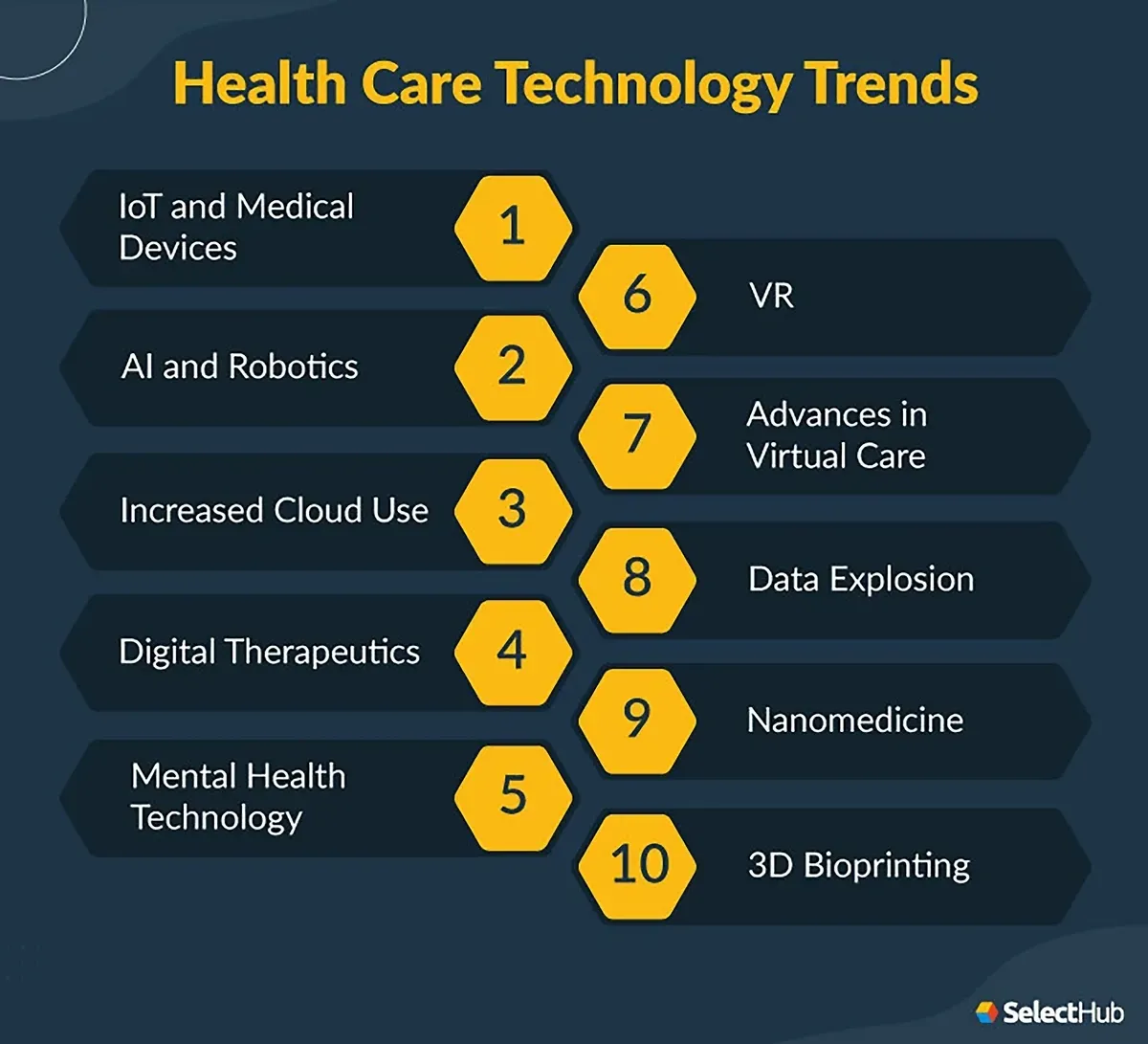
Technology in healthcare is transforming the patient journey, turning data into insight from the first contact to follow-up care. Telemedicine expands access, enabling remote consultations and timely triage for diverse populations. Digital health platforms aggregate wearables, home monitoring devices, and patient data to support informed decisions. Remote patient monitoring enables real-time symptom tracking and timely interventions beyond the clinic walls. Genomics in healthcare is moving from research labs to bedside care, guiding precision therapies and informing risk assessments as part of healthcare technology trends.
A new wave of health tech is reshaping how care is planned, delivered, and evaluated. Smart devices, cloud-based analytics, and interoperable clinical systems enable continuous monitoring, decision support, and personalized treatment pathways. Virtual care platforms, digital medicine, and AI-assisted diagnostics are powering more proactive and data-driven patient experiences. This shift hinges on secure data exchange, patient consent, and governance frameworks that balance innovation with safety and privacy. As healthcare technology trends continue to evolve, providers increasingly rely on integrated ecosystems that connect clinicians, patients, and researchers.
Frequently Asked Questions
How is technology in healthcare, including telemedicine and remote patient monitoring, transforming patient access and outcomes?
Technology in healthcare, through telemedicine and remote patient monitoring, expands access to care by reducing travel and enabling continuous, data-driven management of chronic conditions. Telemedicine platforms integrate with electronic health records to provide real-time data from home devices, labs, and imaging, supporting timely decisions and fewer unnecessary visits. AI-driven analytics and decision-support further personalize care and optimize resource use while upholding strong data security and patient privacy.
In what ways does genomics in healthcare interact with digital health and current healthcare technology trends to enable precision medicine?
Genomics in healthcare brings genome-informed decisions to preventive care, pharmacogenomics, and targeted therapies, shifting care from generalized to personalized. When combined with digital health tools and healthcare technology trends, genomics enables precision diagnostics and treatment, with data governance and patient engagement ensuring safety and equity. Interoperability, robust validation, and privacy protections are essential as genomic data flows across care settings.
| Aspect | Key Points |
|---|---|
| Telemedicine & Remote Care |
|
| Digital Health, AI & Decision-Support |
|
| Genomics in Healthcare |
|
| Interoperability & Data Governance |
|
| Emerging Trends & Practical Implications |
|
| Integration & Workflows |
|
Summary
Conclusion: Technology in healthcare is redefining how care is delivered, experienced, and governed. From telemedicine enabling accessible, timely care to genomics guiding personalized interventions, the fusion of digital health, AI, and data integration promises better outcomes, greater efficiency, and expanded access. Realizing this promise depends on thoughtful design, robust interoperability, patient-centered privacy protections, and a commitment to equity. As healthcare systems continue to evolve, the focus should remain on translating clicks and data into compassionate, precise, and effective care for every patient. The journey from telemedicine to genomics is ongoing, but the destination—better health outcomes through Technology in healthcare—is already within reach.