
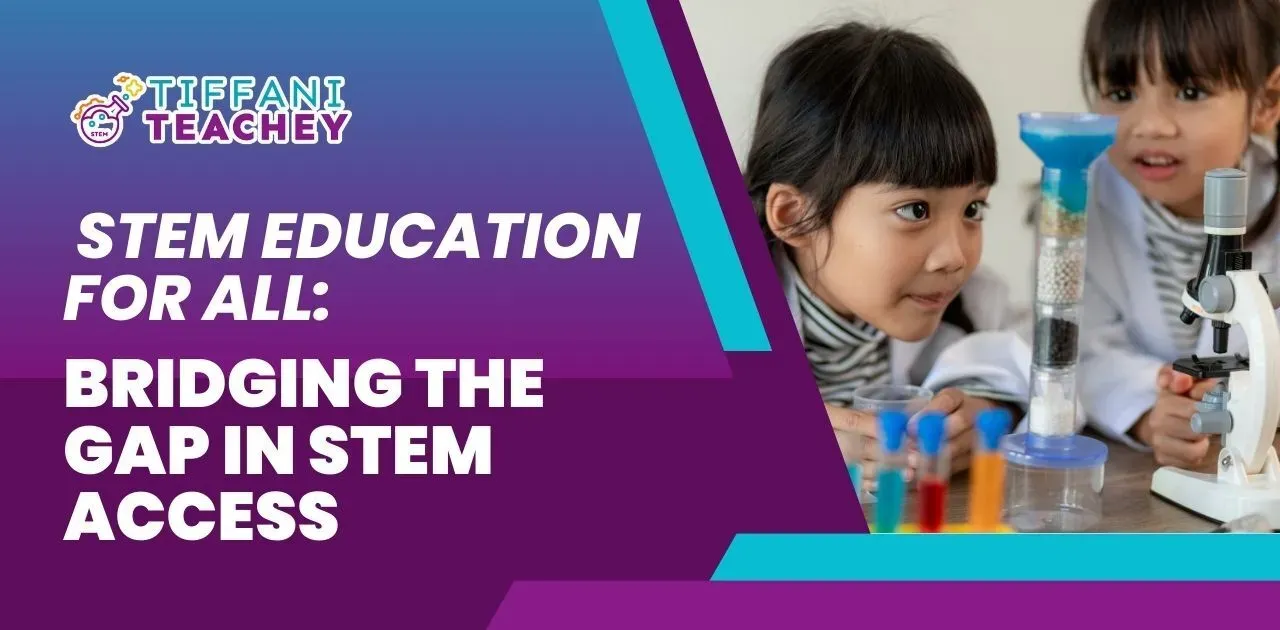
STEM Education for All is a commitment, not a slogan, to ensure every learner—regardless of background, income, or location—has the opportunity to engage with science, technology, engineering, and mathematics. This approach treats STEM literacy as a foundational life skill and advocates inclusive STEM education, high-quality instruction, and relevant experiences that help every student grow. By highlighting early STEM education benefits and showcasing pathways that nurture inspiring young innovators in STEM, we can motivate students. For diverse communities, this means removing barriers and expanding access to STEM education for underserved communities, supported by mentors, resources, and strong partnerships. Together, these elements create an inclusive STEM education ecosystem that fuels curiosity, collaboration, and real-world problem solving.
STEM Education for All: Expanding Access to STEM Education for Every Learner
STEM Education for All is a commitment to universal opportunity, not a slogan. It centers on inclusive STEM education that connects high-quality instruction to the diverse backgrounds, incomes, and locations of learners. By foregrounding equitable access to curricula, hands-on experiences, and supportive environments, schools can help every student develop core STEM literacy and confidence to engage with real-world problems.
Achieving broad access means more than devices or worksheets; it requires intentional design of learning experiences that reflect student interests, cultures, and lived experiences. By removing barriers—such as outdated equipment, limited laboratory space, and uneven teacher preparation—districts can advance access to STEM education for all students, including those in underserved communities. Partnerships with families, museums, industry, and higher education can turn local constraints into opportunities for meaningful, inclusive learning that invites every learner to participate.
Early Benefits, Equity, and Lifelong Engagement: Fostering Inclusive Learning Pathways in STEM
Early STEM education benefits are a cornerstone of lasting achievement. Exposing children to STEM concepts nurtures mathematical thinking, spatial reasoning, and a growth mindset that persists through later schooling. When early experiences are curiosity-driven and joyful rather than test-focused, students form positive associations with learning and are more likely to pursue STEM pathways, contributing to stronger outcomes and higher graduation rates.
The journey to sustainable engagement in STEM hinges on inclusive teaching practices that value diverse perspectives and provide supportive mentorship. By highlighting role models from varied backgrounds and offering multilingual supports, educators can help all students see themselves as potential innovators in STEM. This approach—paired with ongoing teacher collaboration, project-based experiences, and community partnerships—encourages lifelong curiosity and the development of skills that enable students to become inspiring young innovators in STEM.
Frequently Asked Questions
What is STEM Education for All, and how does inclusive STEM education benefit every learner?
STEM Education for All is a commitment to equitable access to high‑quality science, technology, engineering, and mathematics instruction and meaningful experiences for every learner, regardless of background or location. Inclusive STEM education goes beyond devices or worksheets by designing curricula that connect real‑world problems to students’ interests and cultures, using hands‑on projects and inquiry‑based learning. It also focuses on removing barriers for underserved communities through equitable funding, professional development, and community partnerships so all students can explore topics like robotics, coding, and environmental science. When implemented this way, it builds curiosity, critical thinking, and problem‑solving that last through schooling and into adulthood.
How can schools measure progress toward STEM Education for All, and what role do early STEM education benefits play?
Progress can be measured with a mix of quantitative and qualitative indicators, including participation and achievement across different demographic groups, engagement in hands‑on projects, and students’ sense of belonging and agency in STEM spaces, not just test scores. Schools should use these data to guide continuous improvement, adjust resource allocation, and strengthen inclusive teaching practices and family/community partnerships. Recognizing early STEM education benefits as the foundation for lifelong learning helps connect early exposure to stronger academic trajectories, higher graduation rates, and greater interest in pursuing STEM‑related careers.
| Theme | Description |
|---|---|
| Universal access to STEM education | Equitable access to high-quality instruction, experiences, and supportive environments for all learners. |
| Inclusive, rigorous instruction | Curricula connect real-world problems to student interests, cultures, and lived experiences; inquiry-based learning, not just devices or worksheets; assessment values collaboration, perseverance, and creative reasoning. |
| Hands-on learning and assessment | Use hands-on projects, fieldwork, and inquiry-based activities; emphasize collaboration and creative reasoning in evaluation. |
| Access for underserved communities | Remove barriers by addressing shortages of trained teachers, equipment, and lab space; prioritize equitable funding and community partnerships to enable meaningful learning experiences. |
| Early exposure benefits | Develop mathematical thinking, spatial reasoning, and a growth mindset; early STEM experiences are linked to better academic outcomes, higher graduation rates, and more STEM pathways; experiences should be joyful and curiosity-driven. |
| Inclusive teaching practices | Adjust instructional materials to reflect diverse cultures, provide multilingual supports, and offer mentorship; representation increases engagement and persistence in STEM. |
| Family and community partnerships | Families support project-based learning at home; partnerships with community organizations, universities, museums, and industry expand access to hands-on activities and real-world context. |
| Scalable, sustainable programs | Build cross-disciplinary STEM sequences; empower teachers as facilitators; provide time for planning, collaboration, and professional learning communities to sustain inclusive practices. |
| Technology as an equalizer | Provide access to quality hardware/software and use digital tools to personalize learning and expand simulations and coding environments, while pairing with strong human guidance. |
| Outcomes and dispositions | Prepare students for a future reshaped by STEM by fostering curiosity, resilience, collaboration, and ethical reasoning to address local and global challenges. |
| Evaluation and continuous improvement | Track participation, achievement across demographics, project engagement, and sense of belonging to guide interventions and ensure no student is left behind. |
Summary
STEM Education for All is a transformative vision that merges equity with excellence to ensure every learner can engage deeply with science, technology, engineering, and mathematics. By embedding inclusive teaching practices, relevant experiences, and sustained support in classrooms and communities, STEM Education for All builds a robust pipeline of curious problem solvers who can contribute to local and global innovation. Achieving this goal requires collaboration among schools, districts, families, and industry partners, intentional funding, and ongoing assessment to identify gaps and celebrate progress. When implemented with attention to diverse needs and contexts, STEM Education for All can become not just a policy slogan but the standard by which we measure our commitment to educating every student for the challenges and opportunities of the modern world.