
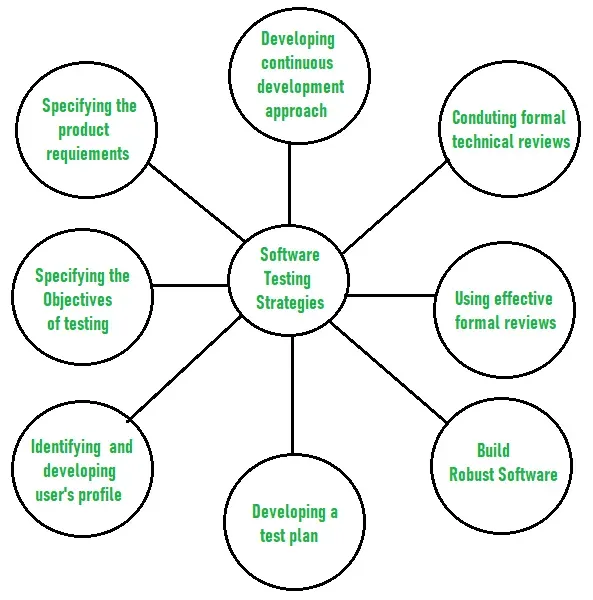
Software Testing Strategies are essential for delivering reliable software at speed, blending human insight with smart automation. From its origins as manual testing to modern automated testing and test automation, effective strategies balance exploration with repeatable verification. This approach helps teams manage regression testing across growing feature sets, improving quality without sacrificing delivery speed. In this guide, we explore why testing strategies matter, how to balance manual testing and automated testing, and how to design a scalable plan. Whether you work on a small app or a large enterprise system, the right mix reduces risk and accelerates value for users.
Seen through the lens of software quality assurance, these ideas translate into testing approaches that balance human insight with automated controls. You can frame the topic as validation workflows, QA practices, and verification processes that ensure features work under real-world conditions. This field emphasizes risk-based planning, test coverage optimization, and the ongoing refinement of both manual probes and automated checks. By aligning testing with user value and product goals, teams can craft methods that scale from small releases to enterprise deployments.
Software Testing Strategies: Balancing Manual Testing and Automated Testing for Reliable Delivery
Software testing today blends human insight with machine precision. Manual testing shines in usability, exploratory evaluation, and edge-case discovery where intuition and real-world context matter. It provides a feel for how users will interact with features and surfaces issues that automated scripts might overlook. At the same time, automated testing scales repetitive checks, accelerates feedback, and strengthens regression testing coverage across complex systems. Together, manual testing and automated testing form a resilient approach that reduces risk while speeding up delivery.
To implement this balance, organize tests by purpose and risk. Prioritize manual testing for usability studies and critical-but-hard-to-quantify scenarios, while reserving automated testing for regression testing, data-driven validation, and high-volume checks. Integrate a thoughtful test automation strategy with your CI/CD workflow, so automated tests run on every change and provide fast, actionable signals. The result is an efficient blend where human insight informs design decisions and automation enforces consistency and repeatability.
A Practical Roadmap for Scaling with Test Automation and Regression Testing
Start your automation journey by selecting a core, high-value workflow as the pilot. Develop robust automated tests for this path to create early confidence and establish reliable regression testing feedback. Maintain a strong manual testing sense for exploratory checks and unanticipated user behaviors, ensuring the human perspective guides validation as automation scales.
As you expand, broaden coverage gradually and invest in stable test data and environments to reduce flakiness. Use a governance model that ties automation targets to product risk, and integrate tests into CI/CD so they run consistently. Measure progress with metrics like defect leakage and maintenance effort, prune brittle tests, and iterate your strategy based on outcomes. This phased approach—combining test automation with ongoing manual testing—helps teams achieve faster delivery without compromising quality.
Frequently Asked Questions
What is a practical Software Testing Strategy for balancing manual testing and automated testing?
A balanced Software Testing Strategy blends manual testing for exploratory, usability, and edge-case validation with automated testing for rapid, repeatable regression checks. Start by identifying high-value, high-risk areas to automate (test automation) and reserve a manual layer for learning, UX feedback, and complex scenarios. Integrate automated tests into CI/CD to deliver fast feedback, maintain test health to prevent brittle tests, and continuously adjust focus as the product evolves. Track metrics such as defect density, test coverage, and pipeline duration to guide automation investments and ensure the manual effort remains purposeful.
How can you design a Software Testing Strategy that emphasizes regression testing and scalable automation?
Start with clear goals and scope: prioritize critical workflows and risks, and select tests to automate based on frequency and impact, with regression testing as a core pillar. Develop a maintainable automation plan using a modular framework, data management, and stable environments. Define automation targets, choose appropriate tooling, and integrate tests into CI/CD. Establish governance and metrics to measure progress. Roll out in stages: pilot the core regression suite, expand coverage gradually, invest in reliable test data and environments, prune flaky tests, and iterate based on results. This strategy keeps regression testing scalable as the product grows while balancing manual testing for user experience and edge cases.
| Topic | Key Points |
|---|---|
| Introduction |
|
| Manual Testing: The Foundation |
|
| Automated Testing: The Scale and Speed |
|
| Balancing Manual Testing and Automated Testing |
|
| Designing a Software Testing Strategy |
|
| Tools, Frameworks, and Practices for Automation |
|
| Implementation Roadmap: From Pilot to Scale |
|
| Measuring the Effectiveness of Your Software Testing Strategy |
|
| The Future of Software Testing Strategies |
|
| Conclusion |
|
Summary
A descriptive conclusion follows after the table, summarizing how a well-designed Software Testing Strategy balances manual testing and automation to deliver high-quality software efficiently.