
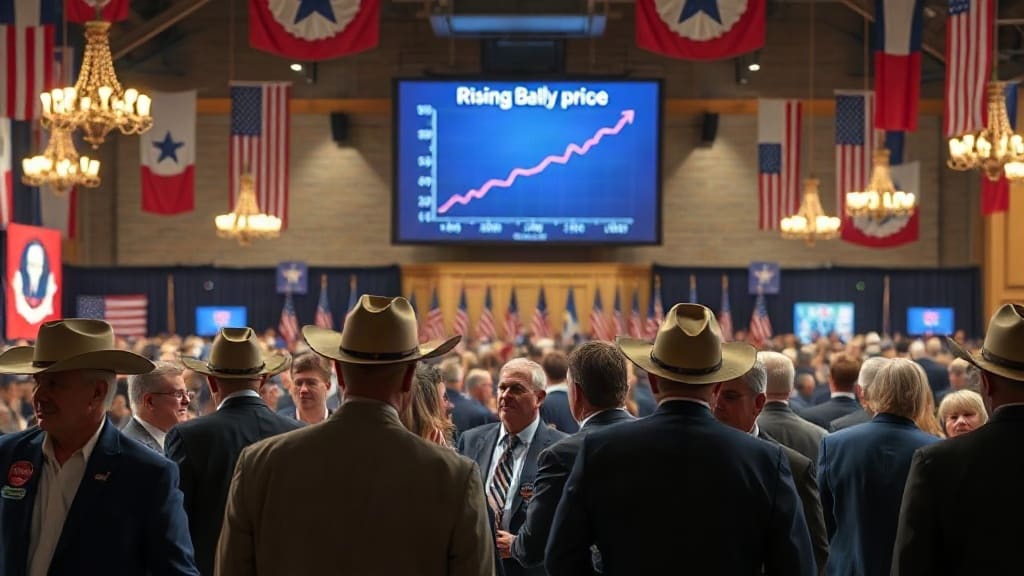
At the Republican Party’s first midterms convention in Texas, a state synonymous with oil, a question hung over the crowded halls: Do Republicans blame former President Donald Trump for the surge in oil prices? With crude approaching $100 a barrel, the answer is far from uniform. Some delegates point to Trump’s deregulatory agenda as a boon for production, while others argue that his trade wars and diplomatic gambits set the stage for today’s pain at the pump. The rift reveals deeper tensions in a party trying to reclaim Congress amid economic anxiety.
The gathering in Texas, hosted by the state GOP, was supposed to showcase unity and a red wave. Instead, conversations in the corridors and on the convention floor kept circling back to energy costs. Oil prices have climbed steadily, driven by a mix of geopolitical risk, supply chain bottlenecks, and recovering demand. But for many Republicans, the political question is who gets the blame. President Biden’s approval rating has taken a hit, but Trump’s shadow looms large, especially as he hints at another run in 2024.
The Trump Energy Legacy: Deregulation vs. Disruption
Trump often boasts that he made America energy independent, a claim that resonates with many in the oil patch. During his term, he rolled back environmental regulations, opened federal lands to drilling, and approved the Keystone XL pipeline. Those moves, supporters argue, lowered costs and boosted domestic production. At the convention, several attendees wore “Drill, Baby, Drill” hats and credited Trump with unleashing American energy.
However, critics inside the party point to Trump’s trade wars, particularly with China, and his withdrawal from the Iran nuclear deal. The latter, they say, destabilized global oil markets and invited volatility. Trump’s sanctions on Iran and Venezuela removed millions of barrels from the market, a fact that some Republicans acknowledge contributed to tight supply. “You can’t have it both ways,” said a delegate from Midland, who asked not to be named. “We cheered when he got tough on Iran, but that had a price. Now we’re paying it.”
Tariffs and the Ripple Effect
Trump’s tariffs on steel and aluminum, imposed in 2018, also raised costs for pipeline construction and refinery maintenance. While those tariffs were aimed at China and other nations, they had indirect effects on the energy sector. Some oil executives at the convention whispered about how the tariffs made new projects more expensive, slowing investment just as demand began to recover from the pandemic. This is a nuanced point that rarely breaks through in political talking points, but it matters to the industry insiders who are feeling the squeeze.
Texas as Ground Zero for GOP Anxiety
Texas is not just any state for Republicans; it is the heart of America’s oil production. The Permian Basin, which stretches across West Texas, is one of the most productive oil fields in the world. When prices rise, Texas typically benefits. But high prices also bring inflation, and voters feel it every time they fill up their trucks. That creates a political paradox: oil producers cheer, but consumers groan.
At the convention, that paradox was on full display. In one panel, a rancher from the Panhandle complained that diesel costs were killing his bottom line. In another, an oilfield services worker said high prices meant more jobs. The party’s messaging has struggled to reconcile these two realities. Trump’s name came up repeatedly, but not always in the way one might expect. Some attendees blamed Biden’s cancellation of Keystone XL and his pause on new federal leases for the current situation, but others were more introspective.
“Look, Trump did a lot for energy, no doubt,” said a county chair from Fort Worth. “But the trade stuff, the tariffs, they hurt us more than we like to admit. And when he pulled out of the Iran deal, that was a gift to OPEC.” That kind of candor is rare at a partisan event, but it reflects a growing unease among Republicans who worry that the party’s own policies have contributed to the pain at the pump.
The OPEC+ Factor
Another layer of the debate involves OPEC+ and its production decisions. Under Trump, the United States had a contentious but sometimes cooperative relationship with Saudi Arabia. Trump often pressured the kingdom to keep oil prices low, sometimes with success. But after he left office, OPEC+ began to manage supply more aggressively, and prices climbed. Some Republicans argue that Trump’s personal diplomacy kept prices in check, while others say his unpredictability made long-term planning impossible for producers. This disagreement is not just academic; it plays directly into the party’s midterm messaging.
Midterm Messaging: Blame Biden or Look Inward?
For Republican candidates running in 2022, the oil price surge is a potent weapon against Democrats. Biden’s approval ratings on the economy are low, and gas prices are a visceral issue. But the internal debate over Trump’s role complicates the message. If Republicans acknowledge that Trump’s policies contributed to today’s high prices, they risk undermining their own attacks on Biden. If they ignore it, they may appear out of touch with the facts.
At the convention, most speakers focused on Biden’s energy policies, blaming him for canceling pipelines, restricting drilling, and pushing a green agenda. The phrase “energy independence” was used repeatedly, often without a clear definition. But in the hallways, the conversations were more nuanced. Some delegates admitted that the global oil market is complex and that no single president controls prices. “It’s not all Biden’s fault,” one young activist said. “But it’s not all Trump’s either. We need to be honest about that.”
The 2024 Shadow
Trump’s potential 2024 candidacy adds another layer of complication. If he runs, he will need to defend his record on energy, including the parts that may have contributed to higher prices. Some Republicans believe that Trump’s base will forgive any economic pain because they see him as a fighter against the establishment. Others worry that independent voters, who are crucial in swing districts, will remember the price spikes and hold Trump accountable. This tension was palpable at the convention, where Trump’s name drew cheers but also some rolled eyes.
What’s Next for Oil and the GOP?
Oil prices are notoriously volatile, and predicting their path is a fool’s errand. But the political impact is already being felt. In Texas, where the economy is deeply tied to oil, the GOP’s internal debate is likely to continue. The party’s ability to craft a coherent message on energy could determine its success in November. If Republicans can blame Biden without ignoring Trump’s record, they may thread the needle. If not, the issue could become a liability.
For now, the answer to the question “Do Republicans blame Trump for high oil prices?” is a qualified yes from some corners, and a firm no from others. The truth is that the party is divided, and that division mirrors a broader national confusion about who is responsible for the cost of energy. As the midterms approach, expect this debate to intensify, especially if prices remain high.
FAQ: Republicans, Trump, and Oil Prices
Did Trump’s trade wars contribute to high oil prices?
Some economists argue that Trump’s tariffs on steel and aluminum raised costs for energy infrastructure, indirectly affecting oil supply and prices. While the direct impact on crude prices is debated, the tariffs added friction to the industry at a critical time.
Why do some Republicans blame Trump for the oil price surge?
Republicans who blame Trump point to his withdrawal from the Iran nuclear deal, which tightened global supply, and his sanctions on Venezuela. They also cite his trade policies, which they say disrupted energy markets and discouraged investment.
How does Biden’s energy policy compare to Trump’s on oil prices?
Biden has focused on transitioning to renewable energy, canceling Keystone XL, and pausing new federal oil and gas leases. Republicans argue these actions have constrained supply and driven prices up, while Democrats point to global factors and the pandemic’s aftermath.
Will high oil prices hurt Republicans in the midterms?
High oil prices generally hurt the party in power, which is currently the Democrats. However, if voters perceive that Republican policies from the Trump era also contributed, the blame may be shared. The GOP’s internal debate suggests the issue is not as clear-cut as simple partisanship would suggest.