
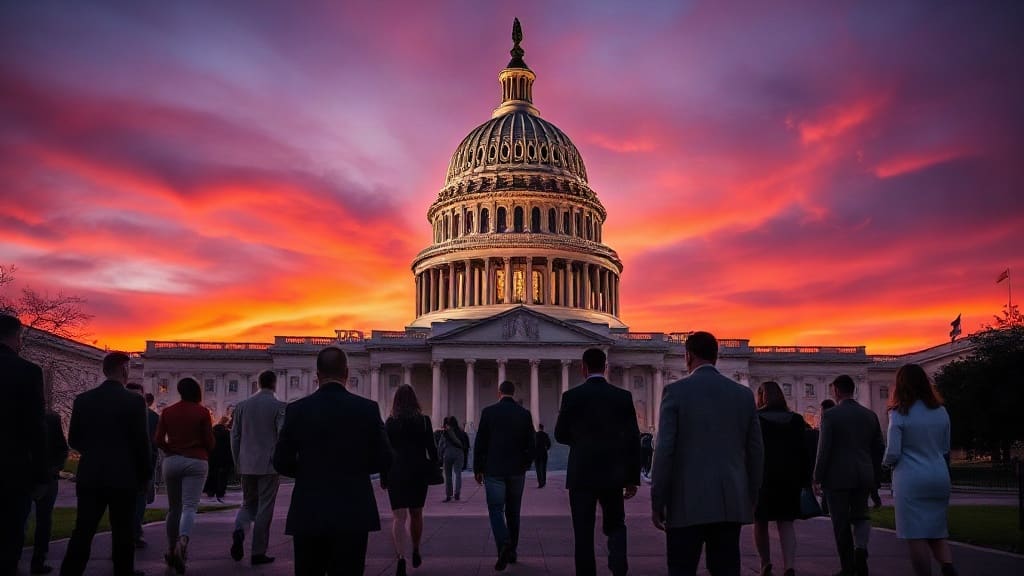
With less than six weeks until Election Day, a noticeable shift is underway within the Republican Party. A growing number of GOP candidates and incumbents are putting distance between themselves and former President Donald Trump on a range of issues, from economic policy to foreign affairs. The moves come as the party scrambles to defend its slim majority in Congress, where every seat counts and independent voters may hold the balance of power.
This is not a coordinated revolt. Rather, it is a series of calculated decisions by individual Republicans who are reading the political tea leaves in their own districts. In swing states and suburban battlegrounds, where Trump's favorability numbers lag, candidates are increasingly emphasizing local concerns over national drama. The result is a party that presents a more fragmented face to voters than at any point in recent memory.
The Roots of the Rift
The distancing did not happen overnight. It has been building for months, fueled by a combination of electoral math, policy disagreements, and a desire to avoid being defined by the former president's controversies. For Republicans in competitive districts, the calculus is simple: tying themselves too closely to Trump could alienate the moderate and independent voters they need to win.
At the same time, Trump remains immensely popular with the party's base. Any perceived slight can trigger a backlash, so the distancing is often subtle. Candidates may highlight their own accomplishments, decline to comment on Trump's latest statements, or emphasize areas where they have differed. It is a delicate dance that requires political agility.
Key Issues Driving the Divide
Several policy areas have become flashpoints. On abortion, some Republicans have softened their stance or shifted focus to economic issues, recognizing that strict positions can be a liability in suburban districts. On Ukraine, a growing number of GOP lawmakers have voiced support for continued aid, breaking with Trump's more ambivalent posture. And on entitlement reform, some candidates are distancing themselves from proposals to cut Social Security and Medicare, which Trump has also vowed to protect but which some in his orbit have suggested trimming.
These are not trivial differences. They reflect a broader debate about the party's identity and its future direction. The outcome of this election could determine whether the GOP remains firmly in Trump's grip or begins to chart a more independent course.
The Electoral Calculus
Republicans are defending a narrow majority in the House and hoping to retake the Senate. The map is challenging, with several incumbents in districts that President Biden won in 2020. In those areas, the path to victory runs through voters who may be put off by Trump's rhetoric and legal troubles.
Internal polling and focus groups have reportedly shown that reminding voters of Trump's more controversial moments can be damaging. As a result, some campaigns are deliberately keeping their distance. They are running ads that focus on local issues, highlighting their own biographies, and avoiding nationalized messaging that could tie them to the former president.
This approach carries risks. The Republican base is still largely loyal to Trump, and any sign of disloyalty can depress turnout or invite a primary challenge. But with the general election looming, the immediate priority is winning over independents and moderate Republicans who may have soured on Trump.
Not a Clean Break
It is important to note that most of these Republicans are not renouncing Trump outright. Many still seek his endorsement, appear with him at rallies, and vote with him on key legislation. The distancing is often a matter of degree, not a complete rupture. They are trying to have it both ways: maintain support from the base while appealing to the center.
This balancing act is nothing new in politics, but the current environment makes it particularly tricky. Trump remains the dominant figure in the party, and his allies are quick to call out perceived disloyalty. The result is a tense coexistence that could shape the party's direction long after this election.
What It Means for Voters
For voters, this split offers both clarity and confusion. On one hand, it shows that not all Republicans are aligned with Trump's every position. On the other, it can be difficult to tell where individual candidates truly stand. The mixed messaging may leave some voters wondering what they are actually voting for.
In the final stretch, expect to see more of this strategic distancing. Candidates will continue to calibrate their messages, hoping to maximize their appeal without alienating the base. The outcome will reveal just how much room there is in today's Republican Party for independence from its most prominent figure.
Frequently Asked Questions
Why are some Republicans distancing from Trump now?
With the election approaching, Republicans in competitive districts are trying to appeal to moderate and independent voters who may be turned off by Trump's controversies. The goal is to retain base support while broadening their coalition.
Does this mean the Republican Party is abandoning Trump?
No. Most Republicans still support Trump and seek his endorsement. The distancing is often strategic and limited to certain issues or rhetorical emphasis, not a full break.
How might this affect the election outcome?
If the strategy succeeds, it could help Republicans hold onto vulnerable seats and possibly gain ground in swing areas. If it backfires, it could depress turnout among Trump's loyal base and cost the party dearly.
What issues are driving the divide?
Key issues include abortion, Ukraine aid, and entitlement reform. Some Republicans are moderating their positions or focusing on economic concerns to appeal to a wider electorate.
Will this trend continue after the election?
Much depends on the results. A strong showing by candidates who distanced themselves could embolden others to follow suit, while a poor performance might reinforce Trump's hold on the party.