
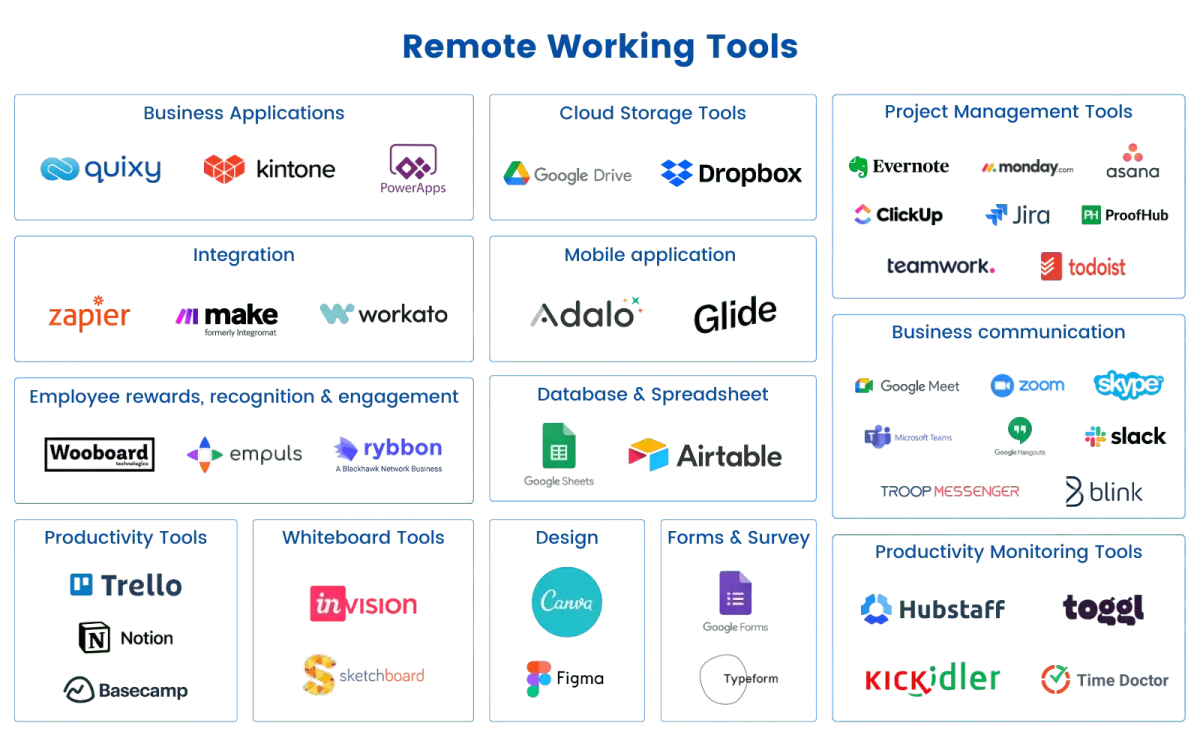
Remote work apps have transformed how modern teams stay productive, turning distributed schedules and cross-time-zone collaboration into a streamlined, measurable process that supports real-time decisions and continuous delivery across devices, teams of all sizes. As teams spread across cities and time zones, the right toolkit reduces friction, speeds decision-making, and helps individuals stay focused on high-value work rather than wrestling with disconnected systems, empowering them to work at their own pace. A thoughtful blend of tools strengthens remote team communication by centralizing updates, fostering transparency, and enabling quick alignment on priorities through shared dashboards and centralized document work. When evaluating tools, prioritize those that fit your workflows, offer robust security, and align with goals you set in project management software to keep everyone marching toward the same milestones. This introduction outlines how to assemble a lean, integrated stack that scales with growth, supports asynchronous collaboration, and delivers measurable results for today's distributed work environments.
To introduce the topic from another angle, consider distributed-work ecosystems that rely on online collaboration platforms, shared workspaces, and cross-border teamwork. Rather than a single app, build a cohesive stack of collaboration hubs, document repositories, task trackers, and secure access controls that enable asynchronous updates and continuous momentum. Semantically related terms, such as cross-functional collaboration platforms, cloud-enabled productivity environments, and virtual teamwork spaces, help readers connect related ideas without repeating exact phrases. In practice, this approach emphasizes interoperability, scalable user management, and a culture of documentation that keeps knowledge accessible regardless of where team members work.
Remote work apps that power virtual collaboration tools and remote team communication
To keep distributed teams aligned, remote work apps must support robust virtual collaboration tools and seamless remote team communication across devices and time zones. A lean, integrated toolkit reduces friction by providing cross-platform availability, offline options, and strong security features such as single sign-on (SSO) and multi-factor authentication (MFA). When these tools integrate with existing workflows rather than forcing teams to adapt, productivity stays high and decisions move quickly, even in dynamic environments.
A practical toolkit should cover core categories—communication and collaboration, file storage, and knowledge capture—designed around real work processes. Real-time co-editing, asynchronous updates, and centralized knowledge bases enable faster decisions and reduce email overload. Look for options that support project management software needs while syncing with cloud-based productivity apps so everyone stays on the same page, no matter where they work.
From cloud-based productivity apps to project management software: optimizing workflows for remote workers
The most effective remote workflows hinge on seamless data flow and clear ownership, leveraging cloud-based productivity apps alongside project management software. Cloud-based productivity apps provide scalable storage, shared workspaces, and automatic syncing, while project management software keeps tasks visible, priorities clear, and timelines aligned. By weaving these tools together through integrations and automation, teams gain extra time for deep work and improve time management for remote workers.
To implement with confidence, start with a pilot, define ideal workflows, and measure adoption. Prioritize integrations that automate routine handoffs and minimize manual data entry, and set guardrails for communication to avoid tool sprawl. Emphasize security and privacy, with MFA and centralized identity providers, so your remote team can collaborate efficiently without compromising data integrity.
Frequently Asked Questions
What should I look for in remote work apps to boost remote team communication and virtual collaboration?
Key criteria for remote work apps include cross‑platform reliability, offline or low‑ bandwidth access, and strong security (SSO and MFA). They should integrate with your existing workflows to avoid silos, and for remote team communication and virtual collaboration, prioritize real‑time co‑editing, asynchronous updates, intuitive onboarding, and robust permissions.
How do cloud-based productivity apps and project management software fit into a remote work toolkit and support time management for remote workers?
Cloud-based productivity apps and project management software should connect through integrations and offer unified dashboards and automation to streamline workflows. They support time management for remote workers by tracking deadlines and workloads, reducing unnecessary meetings, and improving visibility and accountability across the team.
| Key Point | Description |
|---|---|
| The Core Idea | Effective remote work apps are reliable, secure, cross‑platform, integrate with workflows, offer offline/low‑bandwidth options, and protect data with SSO/MFA; they should support actual work processes rather than forcing tool adoption. |
| Essential Categories | Communication & collaboration; Project management; File storage & sharing; Time management & productivity; Knowledge capture; Security & device management; Automation & integration. |
| Practical Toolkit Principles | Combine tools that enable quick conversations, real-time co-editing, boards/tasks, centralized storage with clear permissions, personal productivity, a knowledge base, strong security, and an automation layer to connect apps. |
| Remote Work Implementation | Audit current tools and workflows; define ideal workflows; pilot with a small group; prioritize integration and onboarding; measure and adjust. |
| Getting the Most | Establish a clear tool stack, create guardrails for communication, use templates and automation, foster documentation, and enforce security by default. |
| Common Pitfalls | Tool overload, poor integration planning, inconsistent usage, neglecting security, and overreliance on meetings. |
| Measuring ROI | Faster decision‑making, improved collaboration, higher productivity, shorter cycle times, fewer meetings, better transparency, and balanced workloads. |
| Privacy & Ethics | Limit data sharing, enforce least‑privilege access, audit permissions, communicate data practices, and allow appropriate personal device use. |
Summary
Conclusion: Remote work apps are not a luxury; they are a practical necessity for productive, modern teams. A lean, well‑integrated stack that covers communication, collaboration, task management, file storage, productivity, and security helps teams stay connected and deliver high-quality work while maintaining flexibility—anytime, anywhere. Start by auditing current workflows, choosing tools that fit your processes, piloting with a small group, and scaling with continuous feedback. When done thoughtfully, Remote work apps empower your team to work more efficiently, reduce friction, and sustain performance across distributed environments.