
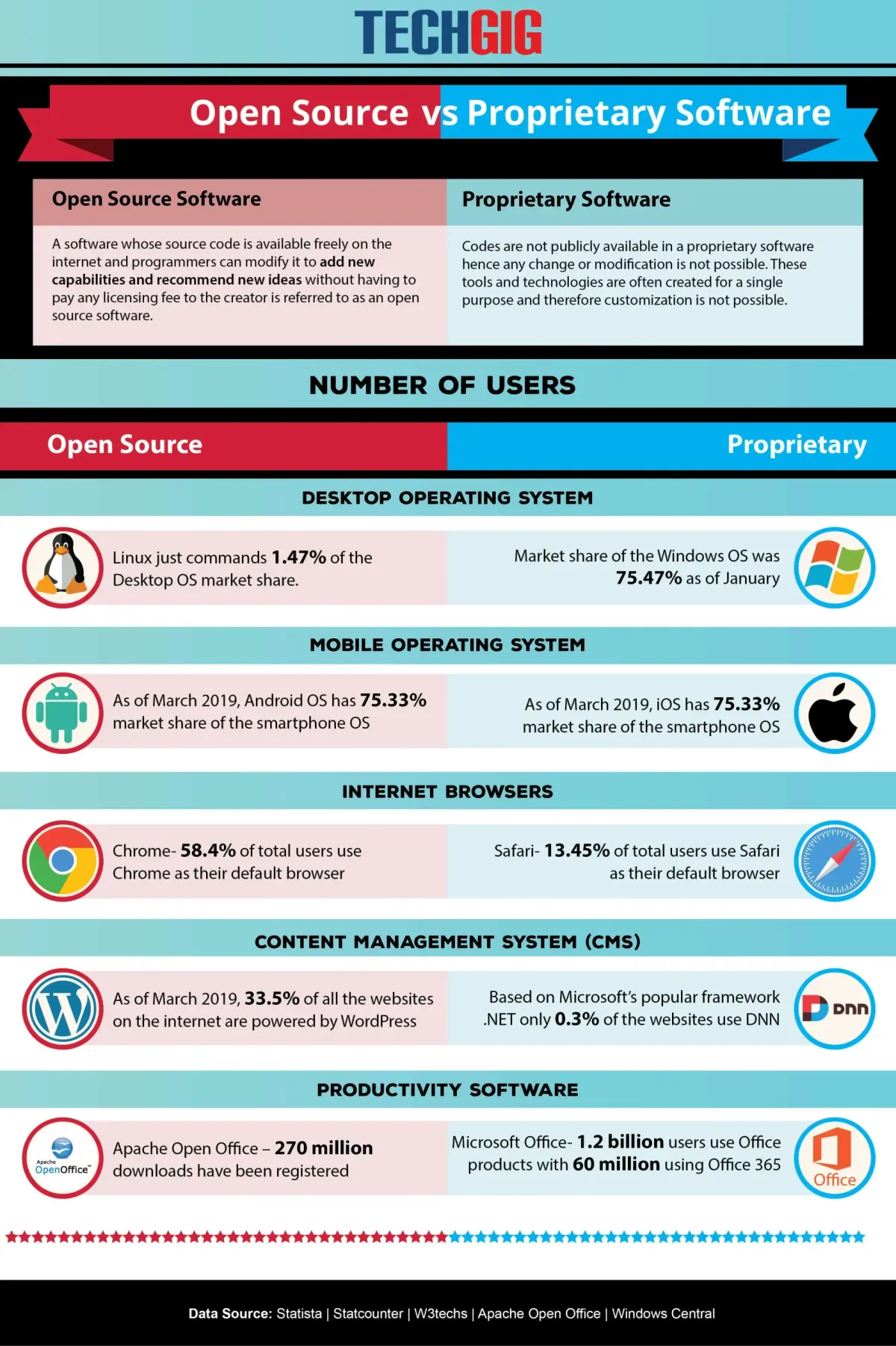
Open-Source Software vs Proprietary is a strategic choice that organizations weigh when planning technology roadmaps and budgets. This is also where the 'open-source vs proprietary software' debate plays out as teams weigh control, speed of innovation, and risk. Understanding the 'benefits of open-source software' helps teams see how community collaboration, transparency, and customizable code can unlock agility. A careful lens on the total cost of ownership open-source vs proprietary reveals trade-offs beyond upfront price, including maintenance, staffing, and long-term risk. Security considerations open-source software and license models for open-source software inform how you govern risk, audits, and license compliance.
Seen through a Latent Semantic Indexing (LSI) lens, the same decision can be described as open source versus closed source, or community-driven software versus vendor-tied solutions. Alternative framing uses terms like source code transparency, governance models, and the availability of commercial support to capture the same underlying trade-offs. By mapping licenses—permissive versus copyleft—and contemplating nuances such as total cost of ownership, security posture, and interoperability, you can compare options without getting stuck on labels. This approach helps stakeholders connect technical realities to business goals, enabling clearer evaluations of control, risk, and long-term agility.
Open-Source Software vs Proprietary: Costs, Control, and Innovation
Deciding between Open-Source Software and Proprietary options is more than a price comparison; it’s a decision about long-term control, agility, and how you govern software across teams. Open-Source Software (OSS) often reduces upfront licensing fees and can accelerate innovation through community collaboration, but it shifts some cost and risk to your internal teams for deployment, customization, and ongoing security. When evaluating the total cost of ownership, consider not only license or subscription prices but also the resources required for installation, integration, monitoring, and skilled personnel who can maintain and secure the software over time.
For many organizations, the benefits of open-source software include flexibility, the ability to tailor solutions to unique processes, and faster iteration cycles. However, those benefits come with governance needs: you’ll want clarity on contribution policies, secure coding practices, and a plan for long-term maintenance. The decision framework should weigh the advantages such as faster feature delivery and reduced vendor dependence against the costs of internal development, training, and potential license compliance responsibilities. In practice, a balanced or hybrid approach often emerges as the most pragmatic path.
In short, the choice between OSS and proprietary software influences not just cost, but risk, vendor relationships, and the speed at which teams can innovate. A structured evaluation that addresses the open-source governance model, staff capabilities, and the planned mix of OSS and vendor-backed components helps organizations realize the benefits of open-source software while maintaining reliability and control.
Security, Licensing, and Governance in Open-Source Software: Navigating Risks and Opportunities
Security considerations open-source software are a central part of any OSS vs proprietary evaluation. The transparency that enables rapid patching and community-driven fixes can enhance resilience, but it also requires formalized processes for vulnerability management, dependency tracking, and incident response. Building a mature program—such as maintaining a software bill of materials (SBOM), conducting regular security testing, and implementing robust patching practices—helps mitigate risk while preserving the benefits of openness.
License models for open-source software add another layer of complexity. Copyleft licenses (for example, GPL) can impose obligations to share improvements, while permissive licenses (like MIT or Apache) tend to offer more freedom for commercial use and redistribution. A clear governance model should include a license inventory, defined compliance processes, and a policy that aligns with your organization’s risk posture. Understanding these license terms and their implications on redistribution, attribution, and license compliance is essential for avoiding legal and operational surprises.
To operationalize these considerations, organizations should implement practical steps such as maintaining a robust vulnerability management program, performing dependency checks, and conducting pilot tests before full-scale adoption. Clear decision rights, vendor management, and ongoing monitoring—combined with a well-documented SBOM and license governance—can enable a reliable and secure hybrid approach that leverages OSS where appropriate while ensuring vendor accountability for mission-critical components.
Frequently Asked Questions
Open-Source Software vs Proprietary: How does total cost of ownership (TCO) typically compare for organizations?
Total cost of ownership (TCO) in Open-Source Software vs Proprietary decisions goes beyond upfront price. Consider licensing, deployment, maintenance, staff, migration, and governance. Key points: - Open-Source Software costs: often lower per-seat licensing; however, you’ll need internal or external resources for setup, integration, security, ongoing updates, training, and documentation. License models for open-source software (permissive vs copyleft) affect compliance and long-term cost. - Proprietary software costs: licensing can be predictable but ongoing maintenance, support contracts, and upgrade fees can raise TCO. Data storage, user counts, and feature tiers matter, and vendor lock-in is a consideration. - A thorough TCO analysis should include hardware or cloud resources, personnel, migration, and renewal terms. In practice, OSS can reduce licensing costs and increase flexibility, but shifts risk to internal capabilities or third-party services; proprietary software can offer strong vendor guarantees but may incur higher ongoing costs. - Practical takeaway: map workloads, run pilots for critical components, and build governance to manage licenses, security, and outsourcing needs.
Open-Source Software vs Proprietary: What security considerations should guide governance and risk management?
Security considerations for Open-Source Software vs Proprietary choices hinge on governance and risk management. Key points: - OSS security: transparency supports rapid vulnerability remediation but requires active patching, a formal SBOM, dependency checks, and ongoing vulnerability management to address supply chain risk. - Proprietary security: vendor patches and SLAs can simplify risk management for teams with limited security staff, but you depend on the vendor’s cadence and must ensure regulatory alignment and audit trails. - Governance steps: implement incident response planning, access controls, version control, and license compliance across both models; maintain a robust vulnerability program and routine security testing. - Practical tips: maintain SBOMs, run vulnerability scans, validate updates in staging, and tailor remediation timelines to risk tolerance and regulatory needs. Also consider license models for open-source software and ensure your procurement policy aligns with security and governance goals.
| Key Point | Summary | Implications / Notes |
|---|---|---|
| Definitions (OSS vs Proprietary) | Open-Source Software (OSS) makes source code available for use, modification, and redistribution under licenses such as MIT, Apache, or GPL. Proprietary software is closed source and controlled by a single vendor or small coalition. | OSS emphasizes transparency and community or vendor support; Proprietary emphasizes centralized control and vendor-based roadmaps. |
| Cost & Total Ownership (TCO) | OSS can reduce upfront licensing costs but requires budgeting for internal staff, consulting, deployment, security, and ongoing maintenance. Proprietary software often has recurring licenses/subscriptions plus maintenance and upgrade fees. | TCO analysis should include hardware/cloud, personnel, training, migration, and possible vendor contracts. OSS may lower license costs but shifts risk to internal capabilities; proprietary may offer predictable support at higher ongoing fees. |
| Security, Compliance & Risk Management | OSS transparency can speed vulnerability discovery and patching, but requires robust internal governance, SBOMs, and supply-chain risk management. Proprietary software provides patches through vendor SLAs but depends on vendor cadence. | Both models need mature vulnerability management, incident response, and regulatory alignment; governance determines effectiveness regardless of model. |
| Flexibility & Innovation (Customization) | OSS supports customization, forks, and integration with bespoke systems. Proprietary software typically offers APIs or extensions but limited customization beyond vendor-provided options. | A blended approach (open-core, open-source components in a proprietary stack) is common to balance customization with predictable support. |
| Support, Reliability & Ecosystem | OSS relies on community and third-party vendors for support; its ecosystem varies by project. Proprietary software typically provides formal SLAs, onboarding, and enterprise-grade features. | Choosing between models often depends on the desired mix of community support versus formal vendor-backed support and ecosystem maturity. |
| Governance & Licensing | OSS licenses differ (copyleft like GPL vs permissive like MIT/Apache). Compliance, attribution, and redistribution rights must be governed. Proprietary licenses define terms, data handling, and usage restrictions. | Effective governance includes licensing inventories, compliance processes, and clear decision rights for sourcing, sharing, and deploying code. |
| Migration, Integration & Operational Readiness | OSS integration can be challenging due to multi-project dependencies; require automation, CI/CD, and careful migration planning. Proprietary tools often offer connectors and documented APIs but may incur vendor lock-in. | Plan phased migrations, pilot components, ensure data portability, and align stakeholders across IT, security, and business units. |
| Practical Decision Framework | A practical framework includes defining business outcomes, inventorying workloads, evaluating licensing and risk, calculating TCO, assessing security needs, piloting critical components, and defining governance. | Use a structured, repeatable process to reduce risk and accelerate evidence-based decisions. |
| Real-World Scenarios & Use Cases | Tech teams may favor OSS for infrastructure components with vendor-backed support for mission-critical pieces; enterprise apps may prefer proprietary tools with audits and strong SLAs; hybrids are common. | Select patterns—hybrid stacks, open-core models, and strong governance—to balance cost, speed, risk, and control. |
Summary
Open-Source Software vs Proprietary decisions shape how organizations balance control, cost, and risk. When choosing between these models, consider governance, licensing, security, interoperability, and migration readiness to align with strategic goals. A balanced or hybrid approach often provides the best path to innovation and reliability, enabling teams to move from debate to evidence-based decision-making.