
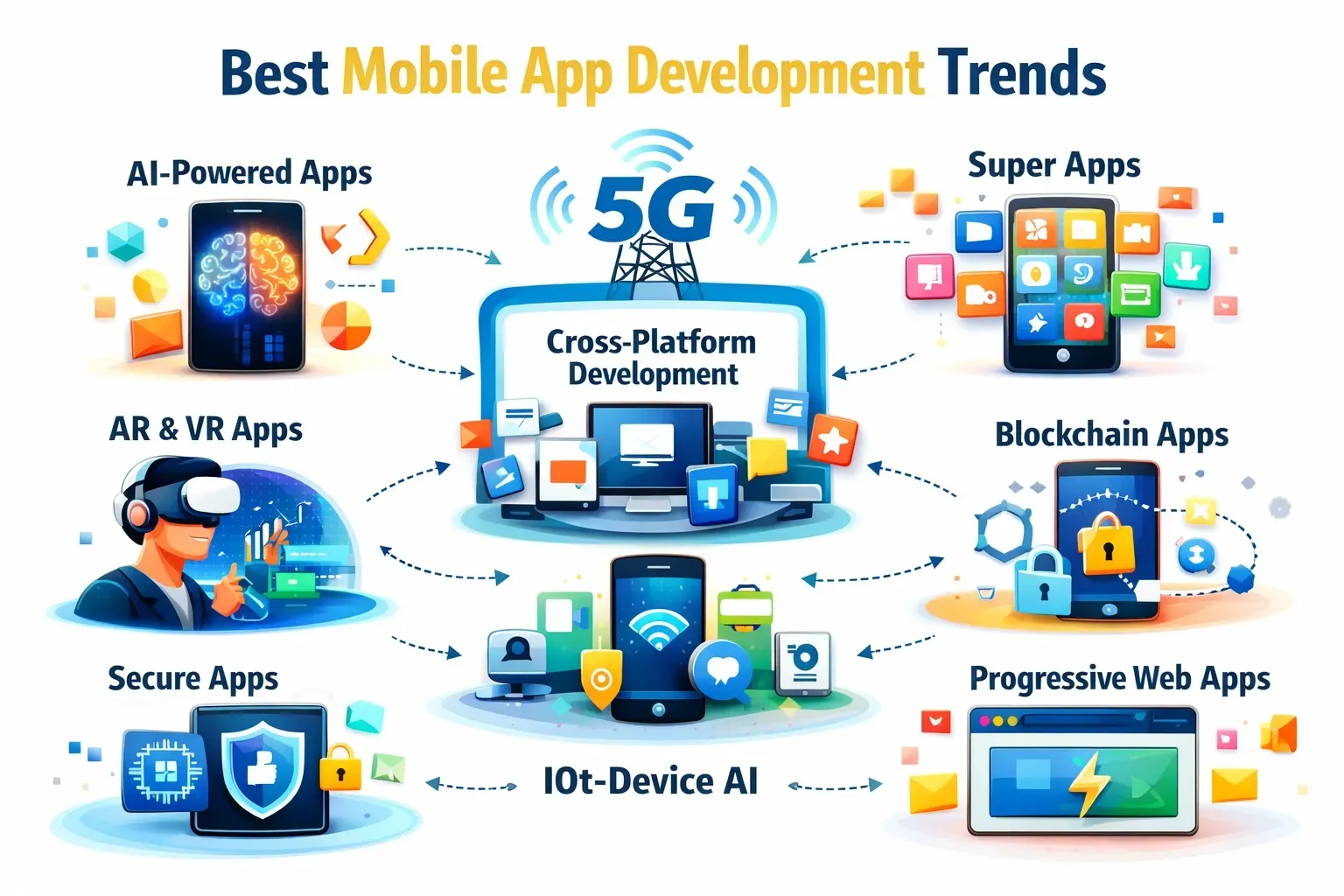
Mobile App Trends 2026 are redefining how developers design, build, and monetize mobile experiences, signaling a year when intelligence, speed, and personalization converge. As smartphones grow more powerful and users demand seamless, context-aware interactions, the bar for what constitutes a successful app continues to rise. These shifts reflect deeper changes in technology, user behavior, and platform ecosystems that will shape which apps capture attention and drive value. For stakeholders, understanding these forces is essential to prioritize product strategy, architecture, and go-to-market plans. By aligning capabilities with evolving expectations, teams can craft apps that feel indispensable rather than optional.
Looking beyond the headline buzz, the broader mobile software landscape in 2026 is defined by intelligent personalization, edge computing, and privacy-focused design. These factors give rise to AI-powered mobile apps that learn from user behavior while keeping data on-device where possible. Developers balance cross-platform efficiency with platform-specific refinements to deliver consistent experiences across devices. The result is a resilient, adaptable app ecosystem where real-time connectivity, strong trust, and optimized performance drive user loyalty. The practical implication for teams is to invest in modular architectures, privacy-first data practices, and rapid iteration to stay ahead in this evolving landscape.
Mobile App Trends 2026: AI-powered Personalization, On-device Intelligence, and Privacy-First Design
AI-powered mobile apps are evolving to deliver personalization in real time, leveraging on-device inference to tailor experiences without unnecessary data transfer. This approach reduces exposure while still enabling meaningful recommendations, aligning with privacy-preserving inference and granular user controls. By focusing on edge AI, developers can balance personalization with performance and battery life, creating experiences that feel intimate without compromising security.
To sustain this shift, architects must embrace modular machine learning components, efficient model design, and energy-aware runtimes. A smart, scalable approach includes selective data sharing, local feature stores, and privacy-preserving analytics that respect user consent. As a result, apps can offer contextually relevant content—whether based on location, time, or activity—without becoming invasive or slow.
Ultimately, the AI-powered dimension of Mobile App Trends 2026 signals a move from generic functionality to user-centric value. Brands that prioritize transparent data practices, robust trust signals, and reliable performance will differentiate themselves through deeper engagement, higher retention, and measurable ROI.
5G-enabled Features and cross-platform development trends 2026: Real-time Capabilities, Immersive Experiences, and Unified UX
The maturation of 5G-enabled features expands the practical reach of mobile apps beyond faster downloads to real-time collaboration, low-latency gaming, and edge-assisted processing. With 5G, live streaming becomes more reliable across devices, while cloud-enabled AR and synchronous workflows unlock new business models and audience experiences. This shift supports more immersive, responsive apps that feel instantly available across contexts.
On the development side, teams increasingly blend cross-platform tooling with native modules to preserve critical performance. The trend toward cross-platform development trends 2026 emphasizes code reuse, faster iterations, and a cohesive user experience across iOS, Android, and desktop environments. Flutter, React Native, and emerging platforms coexist with platform-specific optimizations to deliver a balanced, high-quality product at speed.
Together, 5G-enabled features and cross-platform development strategies drive faster time-to-market, consistent UX, and scalable maintenance. By combining edge computing where possible with selective native optimizations, apps can maintain performance, privacy, and reliability as user expectations rise and the ecosystem evolves.
Frequently Asked Questions
What are the defining considerations for AI-powered mobile apps within Mobile App Trends 2026, and how can developers balance on-device ML, privacy, and personalization?
AI-powered mobile apps in 2026 rely on on-device inference to protect privacy while delivering real-time personalization. Developers should adopt modular architectures and energy-efficient models to reduce battery drain and heat, while offering transparent consent and minimal data collection. This approach aligns with Mobile App Trends 2026 by enabling fast experiences, trustworthy data handling, and scalable personalization.
How do 5G-enabled features and cross-platform development trends 2026 influence app performance, user experience, and monetization strategies under Mobile App Trends 2026?
5G-enabled features unlock real-time collaboration, immersive media, and low-latency experiences, while cross-platform development trends 2026 push for reusable code and native performance where it matters most. Teams should blend cross-platform frameworks for rapid delivery with platform-specific modules to preserve polish and responsiveness. Those choices, combined with clear data strategies and value-driven monetization, define success in Mobile App Trends 2026.
| Theme | Description | Impact / Why it matters |
|---|---|---|
| AI-powered mobility and personalization | On-device ML with privacy-preserving inference and selective data sharing enables real-time, context-aware personalization. Developers focus on efficient model design, modular architectures, and energy management to keep devices cool and preserve battery life. | Differentiates apps, boosts engagement and loyalty, while respecting user control. |
| 5G-enabled features | 5G enables real-time collaboration, immersive media, and near-instant updates. Practically, this means better live streaming, cloud AR, and low-latency gaming across mobile and desktop ecosystems; enables remote assistance and synchronous tools. | Increases engagement, productivity, and cross-device experiences. |
| Cross-platform development trends 2026 | Maturing tools favor a hybrid approach: native performance for critical features and robust cross-platform code for the rest. Flutter, React Native, and emerging platforms coexist with platform-specific modules to preserve polish where it matters. | Faster go-to-market, consistent UX, and easier maintenance across markets. |
| Security, privacy, and trust | Privacy-first design, clear consent mechanisms, minimal data collection, and robust protections against misuse. Edge computing and on-device inference help minimize data exposure while maintaining functionality. | Builds trust, ensures regulatory compliance, and reduces risk. |
| Contextual intelligence and situational awareness | Location, time, device state, and user activity inform smarter features. Requires advanced models, data pipelines, and privacy-preserving techniques that respect user boundaries while enabling meaningful personalization. | Enhances relevance and personalization without being intrusive. |
| AR, VR, and immersive experiences | Sensors are cheaper and more capable; AR/VR moves from novelty to utility in education, retail, and entertainment. 5G, edge processing, and high-quality sensors enable richer, more persuasive experiences. | Boosts engagement and retention with new ways to interact and purchase. |
| Ecosystem and monetization strategies | Subscriptions, microtransactions, and value-added services persist, but require balance with user value. AI insights optimize pricing, promotions, and adoption while personalization expands the value proposition beyond features. | Supports sustainable revenue while maintaining user value and trust. |
| Data strategy | A robust data strategy remains foundational. On-device processing is increasing, with clear data ownership, transparent usage policies, and granular opt-in controls fueling personalization and analytics. | Drives personalization, analytics, and compliant data governance as a differentiator. |
| Practical blueprint (five core actions) | Five core actions: 1) invest in device-efficient AI; 2) plan for real-time 5G experiences; 3) balance cross-platform development with native modules; 4) embed privacy-by-design; 5) design modular, scalable architectures. | Guides teams toward a resilient, scalable Mobile App Trends 2026 strategy. |
Summary
Mobile App Trends 2026 point to a future where apps are smarter, faster, and more integrated into daily life than ever before. By embracing AI-powered mobility, leveraging 5G-enabled features, and adopting thoughtful cross-platform development, developers can deliver experiences that feel tailored, responsive, and trustworthy. Prioritizing privacy, on-device processing, and modular architectures will enable scalable products that respect user control while unlocking new monetization models. The year ahead invites teams to invest in robust data strategies, responsible AI practices, and a design language that harmonizes performance with a seamless user experience across devices and contexts. Those who stay curious, user-focused, and agile will thrive in Mobile App Trends 2026.