
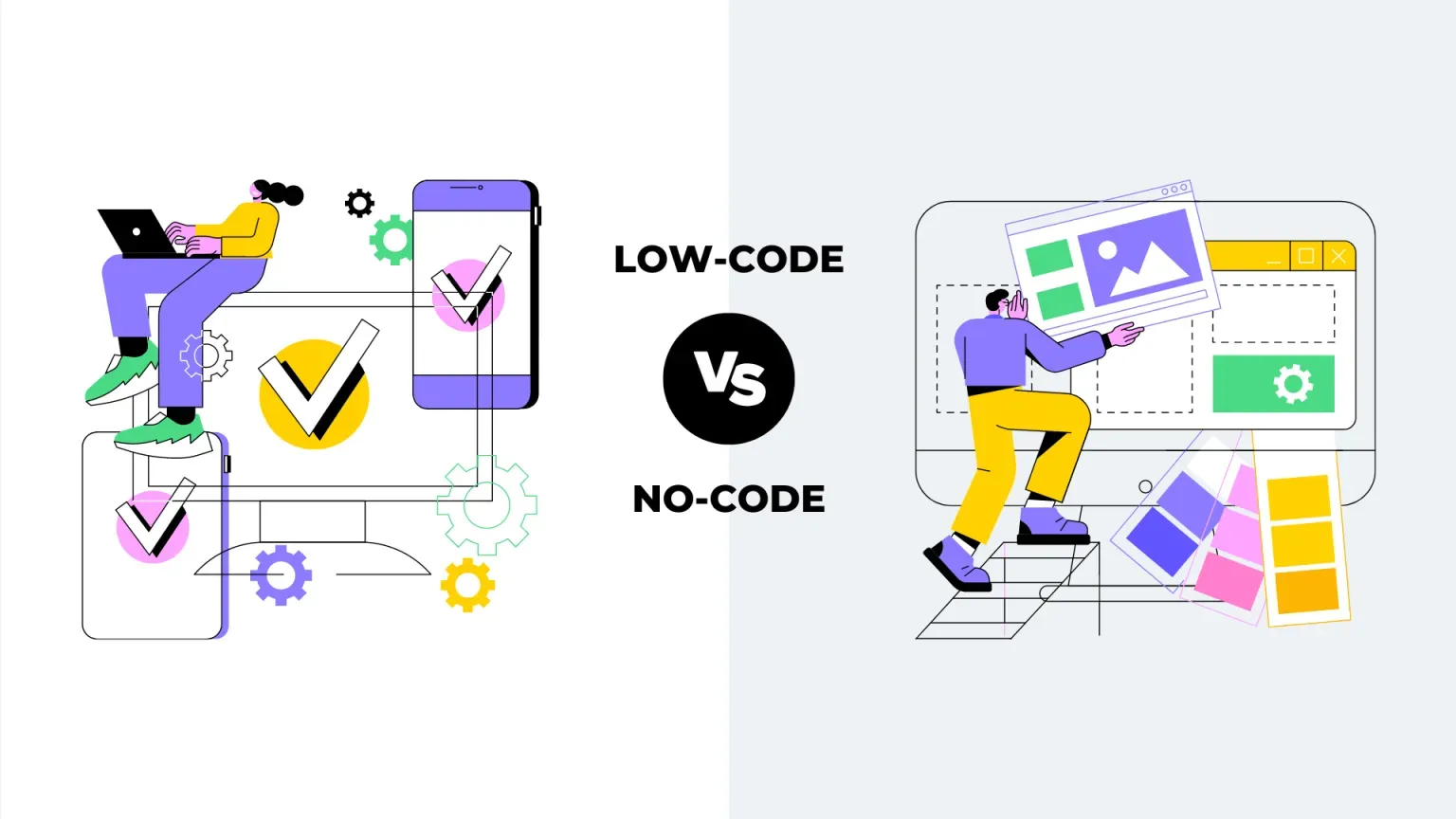
In today’s tech landscape, low-code and no-code software have moved from niche experiments to mainstream engines of digital transformation. As organizations race to accelerate innovation and respond to changing customer needs, these platforms enable rapid application development and shorten delivery cycles. The core idea is simple: empower business users and IT teams, including citizen developers, to collaborate via visual interfaces, pre-built components, and automated workflows. When used well, these tools can shorten delivery timelines, reduce costs, and unlock agility while preserving governance and scalability. This article will explore what low-code development and the no-code platform are, how they fit into digital transformation strategies, and what a practical adoption roadmap looks like.
Seen from another angle, these approaches act as visual development platforms that let teams assemble apps with drag-and-drop builders. They are designed to empower non-technical users while offering governance safeguards and integration with existing systems. In practice, they enable rapid cycles of prototyping, testing, and deployment to deliver value faster without traditional hand coding.
Accelerating Digital Transformation with Low-Code Development and No-Code Platforms
Low-code development and no-code platforms have become catalysts for digital transformation by enabling business users and IT teams to collaborate through visual interfaces, drag-and-drop builders, and pre-built components. This approach accelerates rapid application development, shortens delivery timelines, and reduces backlog while enabling iterative testing and feedback loops.
To maintain governance and security, organizations combine no-code platform capabilities for prototyping with more feature-rich low-code development for complex workflows, ensuring data integrity and enterprise-grade integrations via APIs and connectors. The result is a balanced toolkit that supports citizen developers and professional developers while aligning with enterprise risk controls.
Practical Adoption Roadmap for Low-Code and No-Code Software: From Citizen Developers to Enterprise-Grade Solutions
A practical adoption roadmap begins with discovery, quick wins, and clear governance. Establish a center of excellence or governance board that includes IT, security, and business stakeholders, and plan training programs to uplift citizen developers while ensuring consistent standards.
Phase planning emphasizes starting with high-impact, low-risk processes suitable for no-code prototyping and gradually expanding to more complex workflows that benefit from low-code development with IT oversight. By linking the journey to digital transformation strategies and measuring outcomes—time-to-market, return on investment, and user adoption—organizations can scale responsibly while empowering cross-functional teams to innovate within guardrails.
Frequently Asked Questions
How do low-code development and no-code platform choices accelerate digital transformation strategies and enable rapid application development?
Low-code development and no-code platform choices accelerate digital transformation strategies by enabling fast prototyping, visual app design, and ready-to-use integrations. They empower teams to deliver functional software through rapid application development without heavy coding. IT governance and security controls should be in place to maintain quality and compliance as you scale. Start with simple use cases and progressively expand to more complex processes.
What role do citizen developers play in rapid application development when using low-code and no-code software?
Citizen developers leverage low-code and no-code software to deliver quick solutions, supporting rapid application development with minimal technical effort. With proper guardrails, training, and IT oversight, they can accelerate innovation while keeping data security and governance intact.
| Section | Key Points |
|---|---|
| Introduction | Low-code and no-code software have moved from niche tech experiments to mainstream engines of digital transformation. They empower business users and IT teams to collaborate via visual interfaces, pre-built components, and automated workflows, shortening delivery timelines and reducing costs while maintaining governance and scalability. |
| Understanding the Landscape | Low-code development uses visual interfaces with minimal hand-written code; no-code enables citizen developers to assemble apps with drag-and-drop builders; together they form a continuum and hybrid approach that supports rapid development with governance. |
| Benefits in the Context of Digital Transformation Strategies | Speed to value, reduced reliance on scarce developer talent, greater stakeholder involvement, and an iterative, test-driven approach to transformation. |
| Key Concepts: Low-Code Development, No-Code Platform, and Beyond | Low-code emphasizes visual design, reusable components and connectors; no-code provides higher abstraction for assembling workflows, forms, and dashboards; both include data modeling, workflow orchestration, and API integrations; success depends on tool mix and governance. |
| Choosing the Right Approach for Your Organization | Map objectives to outcomes; decide which projects fit no-code or low-code delivery; governance sets security and data governance, while business teams own day-to-day development within guardrails. |
| Practical Adoption: Use Cases Across Industries | Finance: onboarding and dashboards; manufacturing: track-and-trace and inventory; healthcare: compliant forms and scheduling; public sector: citizen developers automating approvals; IT enforces controls. |
| Implementation Considerations: Security, Integration, and Change Management | Security and privacy by design; role-based access, audit trails, data encryption, secure connectors; standardized connectors and API-first integration; change management and governance; metrics like time-to-market, defect rate, user adoption, ROI. |
| Building a Sustainable Platform Strategy | Treat platforms as a sustainable ecosystem with standards, a center of excellence, governance, and catalogs; guardrails enable scale; monitor usage; invest in training to grow capabilities. |
| A Roadmap to Real-World Success | Phase 1 discovery and quick wins; Phase 2 complex workflows with security and data integrity; Phase 3 scale across departments and geographies; maintain IT collaboration, governance, and measure outcomes against defined criteria. |
Summary
low-code and no-code software are powerful enablers of digital transformation, offering a practical toolkit that accelerates delivery and fosters collaboration between business and IT teams. By combining the strengths of rapid visual development with governance, these platforms empower citizen developers and professional developers to build and scale valuable solutions more quickly while maintaining security and quality. A sustainable program treats the platforms as a managed ecosystem—with standards, centers of excellence, governance, and ongoing training—so teams can iterate with speed without sacrificing compliance. With thoughtful planning, adoption roadmaps align technology choices with business goals, measure outcomes, and continuously improve processes, customer experiences, and operational efficiency.