
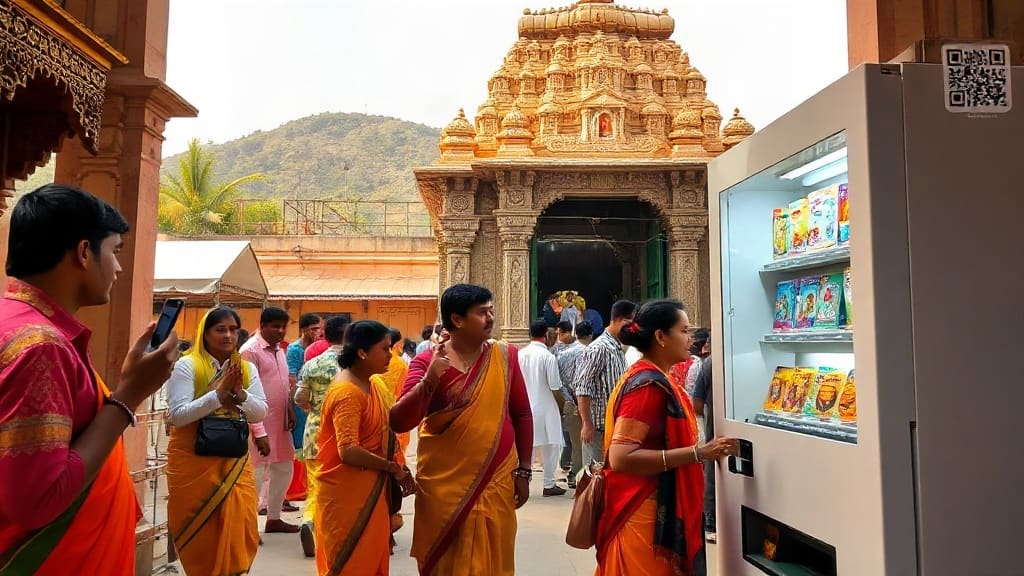
For decades, devotees climbing the 700-odd steps of Indrakeeladri in Vijayawada have faced a familiar test of patience: the serpentine queue for the temple’s famed laddu prasadam. That wait may soon shrink. The Kanaka Durga temple has quietly rolled out Andhra Pradesh’s first laddu ATM, a machine that dispenses the sacred sweet without a human teller. Positioned at the foot of the hill, the kiosk accepts UPI payments and spits out a boxed laddu in under a minute. It is a small piece of automation with an outsized symbolic value: one of India’s busiest shrines is betting on technology to manage devotion at scale.
What exactly is a laddu ATM?
The name is catchy, but the device is essentially a vending machine tailored for a temple. Instead of coins or cards, it runs on the Unified Payments Interface (UPI), India’s ubiquitous real-time payment system. A devotee scans a QR code displayed on the machine, pays the fixed price, and the laddu drops into a collection slot. There is no cash handling, no paper token, and no need to stand in a separate line for prasadam. The pilot machine at Indrakeeladri is stocked with the same laddu sold inside the temple counters, sealed in hygienic packaging.
For temple administrators, the appeal is threefold: it reduces crowding at counters, minimizes cash leakage, and offers a digital record of every transaction. For devotees, it promises speed and convenience, especially for those who visit during peak hours or simply want to grab prasadam without entering the main queue.
Why now? The Dasara rush and beyond
The timing is deliberate. Dasara, the ten-day festival culminating in Vijayadasami, draws lakhs of pilgrims to Vijayawada. Managing that surge is a logistical nightmare: extra counters, temporary staff, and endless queues that snake around the hill. The laddu ATM is a pilot project that could ease the pressure during this period. If successful, it may be expanded to other temples in the state. The Endowments Department, which oversees thousands of temples in Andhra Pradesh, is watching closely. A senior official noted that the machine is part of a broader push to digitize temple services, from online darshan bookings to e-hundi donations.
How it works: a step-by-step look
Using the laddu ATM is straightforward, though first-timers might need a moment to adjust. Here is the typical flow:
- Approach the machine: It sits near the entrance, clearly labelled in Telugu and English.
- Scan the QR code: Open any UPI app (PhonePe, Google Pay, Paytm, or a bank app) and scan the code on the screen.
- Pay the amount: The price is fixed, likely the same as the counter rate. Confirm the payment.
- Collect your laddu: The machine dispenses a sealed box within seconds. A receipt may be printed or sent digitally.
The entire process takes less than a minute, provided the network is stable and the machine is stocked. Temple staff will refill the machine periodically, especially on busy days.
Not just convenience: curbing fake tickets and touts
Alongside the laddu ATM, the Endowments Commissioner issued a stern warning to devotees: beware of fake puja tickets and touts. Every year, unscrupulous elements exploit the festival rush, selling counterfeit tickets or promising VIP darshan that never materializes. The laddu ATM, with its digital payment trail, is a small but concrete step toward transparency. It reduces the physical exchange of cash, making it harder for middlemen to operate. Devotees are encouraged to use official channels, including the laddu ATM and online booking portals, rather than trusting strangers offering "shortcuts."
The bigger picture: technology meets tradition
Indian temples have been slow to adopt technology, often due to concerns about ritual purity, staff resistance, or simply the scale of operations. But the tide is turning. From Tirupati’s massive laddu counters, which already use semi-automated systems, to Karnataka’s temples experimenting with RFID tags for prasadam, automation is creeping in. The laddu ATM at Kanaka Durga is a modest pilot, but it signals a willingness to experiment. It also raises questions: Will machines replace the human touch that many devotees cherish? Can a vending machine replicate the sanctity of receiving prasadam from a priest’s hands?
Temple authorities insist the machine is not meant to replace tradition but to complement it. The laddu is still prepared in the temple kitchen with the same rituals. The ATM is merely a distribution channel, like a counter, just faster.
What devotees are saying
Early reactions have been mixed. Some tech-savvy youngsters appreciate the speed. "I paid via UPI and got the laddu in seconds. No pushing, no waiting," said a devotee from Guntur. Others are sceptical. "I come to the temple for darshan and to buy prasadam from the counter. A machine feels impersonal," said an elderly woman. For many, the laddu is not just a sweet; it is a blessing. The mode of delivery matters less than the faith behind it, but habits die hard.
Challenges ahead
The pilot will face real-world tests. Network glitches, power cuts, and machine jams could frustrate users. Maintaining hygiene and freshness is another concern: laddus have a shelf life, and a machine that sits idle for hours may not be restocked promptly. There is also the question of accessibility. Not all devotees are comfortable with UPI; some may not have smartphones. The temple will need to ensure that traditional counters remain operational for those who prefer cash. The success of the laddu ATM will depend on how well these issues are managed.
Frequently Asked Questions
Where is the laddu ATM located?
It is installed at the foot of Indrakeeladri hill, near the main entrance to the Kanaka Durga temple in Vijayawada.
Can I pay with cash at the laddu ATM?
No, the machine currently accepts only UPI payments. Devotees who prefer cash can use the regular prasadam counters.
Is the laddu from the ATM the same as the temple laddu?
Yes, the laddus are prepared in the temple kitchen and are identical to those sold at the counters.
Will the laddu ATM be available after Dasara?
It is a pilot project. The temple administration will evaluate its performance during the festival and decide on continuation.
How can I avoid fake tickets and touts?
Always use official channels: the temple’s online booking portal, authorised counters, or the laddu ATM. Do not buy from unauthorised persons.
What's next?
If the pilot succeeds, Andhra Pradesh could see more such machines in temples with high footfall. The Endowments Department may also integrate the laddu ATM with its existing e-services, allowing devotees to pre-book prasadam and collect it via the machine. For now, the humble laddu ATM stands as a test case: can technology make a sacred experience smoother without diluting its essence? The answer will unfold over the coming weeks, one scan at a time.