
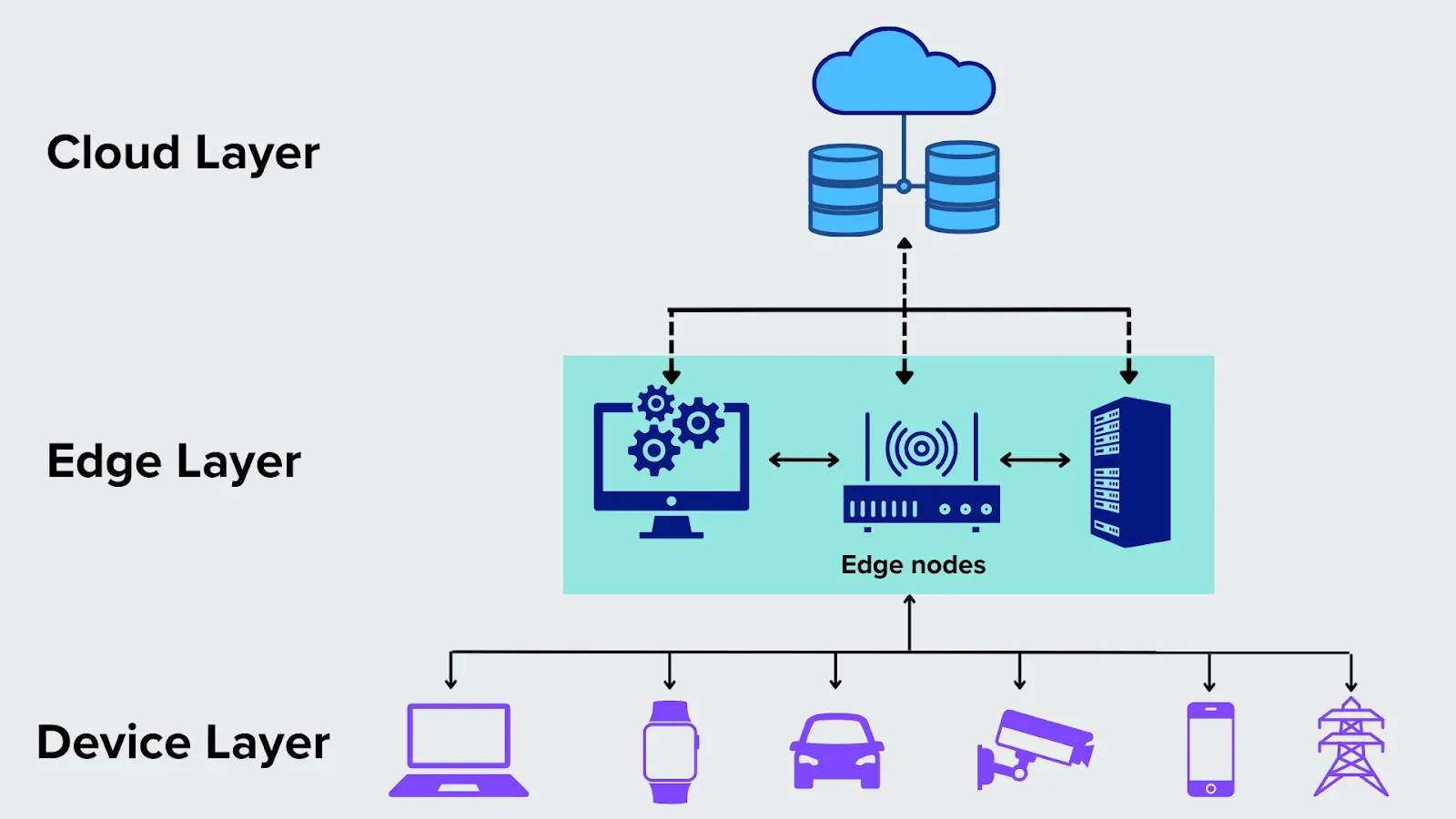
Edge computing reshapes how software is designed, deployed, and scaled in a world of connected devices and real-time data. By moving compute closer to data sources—an approach that blends edge devices and fog computing layers—the system reduces latency and enables more responsive applications. This shifts the center of gravity from centralized data centers toward the edges of the network, supporting distributed systems that need timely insights at the source. As organizations plan for IoT scalability, they must design architectures that balance local processing with cloud capabilities and secure, governance-driven operations across many devices. In short, Edge computing unlocks new business models by turning data into near-instant actions without sacrificing privacy or reliability.
Another way to frame this movement is computing at the edge, where data is analyzed as soon as it is generated by nearby devices. This on-site processing uses edge gateways and local micro data centers to run analytics, support instant decisions, and reduce reliance on distant data centers. In LSI terms, synonyms such as edge-native architectures, local inference, and decentralized computing capture the same core concept as the overarching edge paradigm. The result is a resilient, scalable system that blends near-source processing with central clouds for training and long-term storage.
Edge Computing at the Core: Designing for Real-Time, Local Intelligence
Edge computing moves compute closer to data sources—edge devices, gateways, and micro data centers—so applications can respond in near real time with local analytics and offline-capable behavior. By processing data near the source, organizations reduce bandwidth, improve privacy, and enable more responsive software that adapts to intermittent connectivity. This shift redefines how software is architected, emphasizing distributed systems concepts, modularity, and portability across heterogeneous environments.
In practice, edge-native design combines patterns such as microservices at the edge, event-driven processing, and local data filtering. These patterns help keep critical decisions local while allowing centralized cloud capabilities for long-term storage and model training. The result is a resilient, edge-aware architecture that emphasizes data locality, secure updates, and governance across a diverse fleet of edge devices and gateways.
Fog Computing, Edge Devices, and IoT Scalability: Orchestrating Distributed Systems at Scale
Fog computing sits between edge devices and the cloud, providing a local layer that aggregates data, runs heavier analytics, and absorbs network variability. This tier enables more sophisticated workflows without forcing every decision to travel to the cloud, while still enabling centralized model updates and orchestration across thousands or millions of devices.
Achieving IoT scalability requires careful governance, robust device onboarding, secure firmware updates, observability, and policy-driven control across a broad fleet of edge devices. By coordinating fog nodes, edge devices, and cloud services, organizations can sustain distributed processing, ensure security, and maintain reliability as the system grows—demonstrating how distributed systems scale in practice.
Frequently Asked Questions
How does edge computing, including edge devices and fog computing, boost IoT scalability in distributed systems?
Edge computing moves compute closer to data sources via edge devices and fog computing layers, reducing cloud round-trips and enabling scalable IoT deployments. In distributed systems, local processing, data filtering, and autonomous decision‑making improve latency, privacy, and resilience while lowering bandwidth needs. To maximize benefits, prioritize data locality, lightweight, portable deployments, and robust OTA updates across fleets of devices and fog nodes.
Which architectural patterns are essential for building secure, reliable edge computing solutions that integrate edge devices, fog computing, and cloud services in distributed systems?
Key architectural patterns for edge computing include: microservices at the edge; event‑driven and stream processing; data filtering and local analytics; coordinated cloud‑edge workflows; edge AI and TinyML; and secure, managed delivery. When combined with edge devices, fog computing, and cloud services, these patterns enable scalable distributed systems by reducing data movement, delivering real‑time insights, and maintaining governance and security. Emphasize observability, OTA updates, secure boot, and strong identity management to sustain resilience at scale.
| Aspect | Key Points |
|---|---|
| Definition and Core Idea | Edge computing moves compute closer to data sources, forming a continuum across edge devices, edge gateways, micro data centers, and cloud integration. Benefits include near real-time responsiveness, reduced bandwidth, improved data privacy, and new business models that rely on timely insights at the source. It requires architectural planning to blend edge and cloud, manage a landscape of edge devices, and address security, governance, and reliability. |
| Edge Computing Landscape | Edge computing spans architectures that process data near sources such as sensors and cameras. It is not a binary shift but a continuum involving edge devices, fog computing, micro data centers, and cloud integration. This setup enables selective local processing, data filtering, and sending only necessary data to the cloud, yielding near real-time responses, lower bandwidth use, and improved data locality and privacy. |
| Key Architectural Patterns | • Microservices at the Edge: small, independently deployable services on edge devices or gateways; lightweight containers and orchestration for fleet-wide updates and scaling. • Event-Driven and Stream Processing: real-time reaction to events and sensor data with low latency. • Data Filtering and Local Analysis: local analytics and summarization to reduce data transmitted. • Coordinated Cloud-Edge Workflows: central training/updating, edge inference and adaptation. • Edge AI and TinyML: on-device ML for private, real-time inference. • Secure and Managed Delivery: OTA updates, signed artifacts, centralized policy enforcement. |
| Edge Devices, Fog Computing, and IoT Scalability | Edge devices collect data and perform initial processing; fog computing sits between edge and cloud to run heavier analytics and provide resilience. IoT scalability requires onboarding, authentication, updates, observability, and governance across many devices, with careful choices on protocols, data formats, and service federation. |
| Practical Guidelines for Designing Software | • Define data locality rules to balance edge vs cloud processing. • Use portable, lightweight primitives (containers, unikernels) and platform-agnostic tooling. • Build offline-first capabilities to handle intermittent connectivity. • Implement robust observability (tracing, metrics, logging) with centralized dashboards. • Prioritize security by design (secure boot, encrypted storage, strong identity, signed updates). • Plan updates and governance (OTA pipelines, versioned artifacts, policy-driven config). • Design for reliability and resilience with fault tolerance and graceful fallbacks. |
| Case for Edge Computing in Real-World Projects | A manufacturing plant example shows sensors, on-site analytics (vibration, temperature, defect detection) and local decision-making, with the cloud handling long-term analytics and model updates. A fog layer coordinates across machines, reducing downtime and bandwidth while enabling near real-time action. |
| Security and Governance Considerations | Multi-layered security: tamper-resistant devices, secure boot, encrypted storage, mutual authentication, encrypted data in transit, and robust access control. Software supply chain security (artifact provenance, signed updates) and data governance (retention, minimization, clear data flows) are essential as data moves across edge, fog, and cloud. |
| Future Directions | Cloud–edge integration will deepen with standardized APIs, common data formats, and unified security models. AI at the edge (model compression for on-device inference) will drive autonomous systems and smart devices. 5G/6G will further reduce latency and expand capabilities, broadening the boundary between edge and cloud. |
| Practical Steps to Begin Building for the Edge | 1) Assess business requirements (latency targets, data sovereignty, performance). 2) Map data lifecycle to decide processing location. 3) Start with a minimal edge-native service, then add fog/cloud components. 4) Build a scalable edge platform (containerization, orchestration, OTA, observability). 5) Pilot with a device subset, measure, and refine governance/security. 6) Plan for evolution toward AI-at-the-edge and cloud–edge integration. |
Summary
Conclusion: Edge computing is not just a technology trend; it is a fundamental shift in how software engineers design, deploy, and operate systems in a world of pervasive devices and data. By placing computation closer to data sources, organizations can deliver faster, more reliable experiences while improving privacy and reducing bandwidth costs. The next generation of software will depend on strong architectures that blend edge devices, fog computing, and cloud services into a cohesive ecosystem. Embracing edge-native design patterns, prioritizing data locality and security, and planning for scalable, maintainable deployments will help teams unlock the full potential of Edge computing and software for the future.