
Cybersecurity in a tech-driven world is no longer a luxury but a core business obligation. As organizations accelerate digital transformation, protecting data, devices, and identities becomes foundational to trust and success. This environment demands practical strategies, including cybersecurity best practices, that scale from small teams to global enterprises. Humans, processes, and governance must align with technology to reduce risk, detect threats, and recover quickly. Organizations should prioritize data protection in tech environments and integrate it with incident planning to build lasting resilience.
Beyond jargon, security is best understood as information security for the modern digital ecosystem, with risk management at its core. Shifting the lens toward threat prevention, identity protection, and secure software development helps teams align security with business outcomes. With cloud, remote work, and AI-enabled services, continuous monitoring and robust incident response become essential pillars. Framing security in this way supports not only protection but ongoing innovation and trustworthy operations across the enterprise.
Cybersecurity in a Tech-Driven World: Practical Best Practices for Digital Security in Modern Tech
In a tech-driven world, cybersecurity best practices demand a holistic approach where people, processes, and governance work in harmony with technology. As organizations accelerate digital transformation—leveraging cloud services, AI, and remote or hybrid work—the attack surface expands and threat vectors evolve. Foundations such as identity and access management, patch management, endpoint protection, and secure software development become essential pillars. Digital security in modern tech is not just about tools; it is about clear ownership, risk-based prioritization, and a culture of security that permeates every team.
To translate these practices into measurable results, organizations should map controls to business risk, maintain asset inventories, and implement continuous monitoring and rapid incident response. Data protection in tech environments becomes central, with encryption, data loss prevention, robust backups, and tested recovery procedures ensuring resilience. By embedding security into development and operations—DevSecOps—and aligning governance with business objectives, teams strengthen cybersecurity for businesses of all sizes while mitigating evolving threats.
Cybersecurity for Businesses: Data Protection in Tech Environments and Beyond
For organizations, cybersecurity for businesses means balancing risk with usability. A risk-based assessment identifies critical assets, regulatory requirements, and potential threat vectors, then maps controls to scenarios to reduce risk without hindering innovation. Priorities like data protection in tech environments, proper data classification, and access governance with just-in-time elevation help minimize exposure while maintaining operational efficiency. This approach aligns with cybersecurity best practices and supports compliance across diverse industries.
Beyond technology alone, success hinges on governance, ongoing training, and a resilient security culture. Regular security awareness training, phishing simulations, and rehearsed incident response plans empower people to act as a first line of defense. In a landscape shaped by cloud, AI, and ubiquitous devices, continuous education and clear escalation pathways ensure that data protection in tech environments translates into durable cyber resilience and trusted business outcomes.
Frequently Asked Questions
What are the essential cybersecurity best practices in a tech-driven world for organizations today?
In cybersecurity in a tech-driven world, essential best practices start with strong identity and access management (IAM), including multi-factor authentication and least-privilege access. Establish patch management, robust endpoint protection, network segmentation, and secure development practices (DevSecOps). Complement these with continuous monitoring and an incident response capability to detect, respond, and recover quickly, reinforcing cyber resilience across people, processes, and technology.
How can organizations strengthen data protection in tech environments to advance cybersecurity for businesses?
To strengthen data protection in tech environments and advance cybersecurity for businesses, classify data by sensitivity, enforce encryption at rest and in transit, and implement data loss prevention controls along with regular backups and tested recovery procedures. Pair these with strong IAM, patch management, endpoint security, and secure software development to reduce risk and strengthen cybersecurity for businesses. Regular training and an incident response plan help sustain a resilient security posture in a tech-driven world.
| Topic | Key Points | Examples / Actions |
|---|---|---|
| Introduction | Cybersecurity is essential in a tech-driven world with an expanding attack surface; focuses on people, processes, governance; emphasizes practical steps and resilience. | Highlight data protection, resilience, and security culture; align to threats. |
| Understanding the tech driven landscape | Rapid change and interconnected assets (cloud, mobile, IoT) require risk-based approaches; prioritize critical assets and rapid response; aim to minimize breaches and detect early. | Regular risk assessments, asset inventories, and visibility; forward-looking controls. |
| Key drivers | Remote work, cloud adoption, and generative AI expand the perimeter and create new risks. | Adopt zero-trust, shared responsibility models, and flexible governance. |
| 1) Identity and access management (IAM) | MFA, least privilege, adaptive authentication, regular reviews. | Implement MFA, least privilege, adaptive risk-based access; regularly revoke unnecessary rights. |
| 2) Patch management and software updates | Disciplined patching prioritizing critical vulnerabilities; inventory, track vulnerabilities; timely updates. | Establish patch cadence; maintain inventory; test patches; enforce updates. |
| 3) Endpoint protection and device hygiene | Layered protection including anti-malware, EPP/EDR; secure configurations and encryption. | Deploy EPP/EDR, enforce encryption, disable unused services. |
| 4) Network security and segmentation | Segmentation and zero-trust; use firewalls, IPS/IDS, secure remote access; monitor traffic. | Implement segmentation, zero-trust architecture, continuous monitoring. |
| 5) Data protection and encryption | Encrypt data at rest and in transit; classify data; DLP; robust backups; test restores. | Encrypt, classify data, deploy DLP, maintain backups and test restores. |
| 6) Secure software development and DevSecOps | Integrate security into SDLC; secure coding, code reviews; CI/CD security testing; SBOMs; supply chain security. | Adopt secure SDLC, SBOMs, automated security tests in pipelines. |
| 7) Monitoring, detection, and incident response | Continuous monitoring, SIEM/EDR, threat intel; rehearsed IR plan with roles and comms. | Deploy SIEM/EDR, run IR drills, maintain playbooks. |
| 8) Access governance and least privilege in practice | Governance to review/certify access; Just-In-Time access; audits of privileged accounts. | Implement access governance tools, JIT elevation, regular privileged audits. |
| 9) Education, culture, and ongoing training | Security is a team sport; ongoing awareness training and phishing simulations; practical exercises. | Run training programs, simulations, and security exercises. |
| 10) Business continuity, disaster recovery, and testing | Plan resilience with BCDR strategies; test recovery; data integrity validation. | Develop and test BCDR plans; perform regular drills. |
| Tailoring cybersecurity to business needs | Risk-based assessment to identify critical assets, regulatory needs, threat vectors; align controls with business objectives. | Map controls to risk scenarios; prioritize investments; manage vendor risk; collaborate across teams. |
| Building a resilient security culture | People and processes determine security outcomes; training and incident command structure strengthen security culture. | Foster security habits; celebrate reporting; maintain learning culture. |
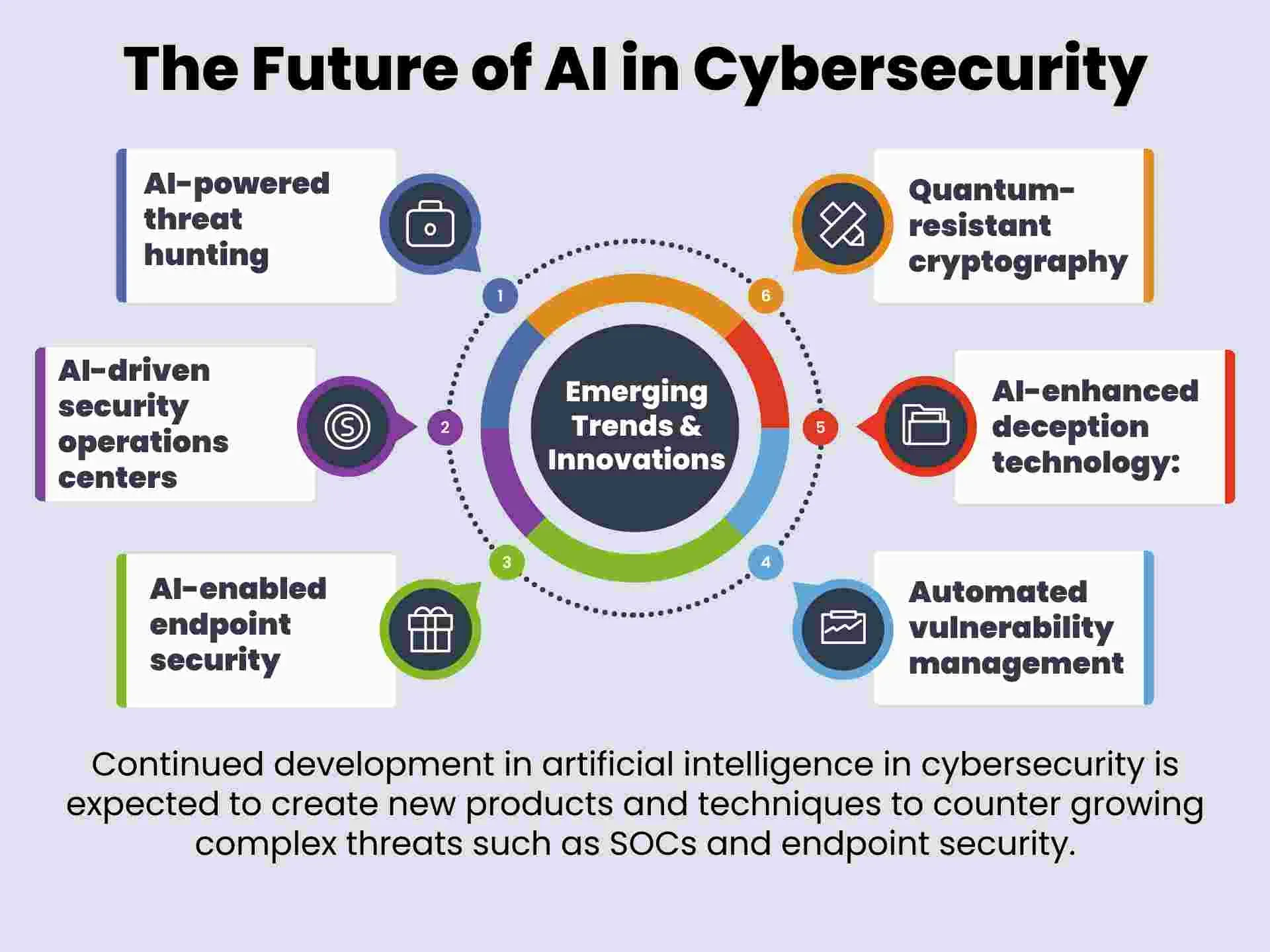
| Future trends and the path forward | Zero trust, AI/ML for defense and automation; attackers also use AI; continuous adaptation needed. | Invest in zero-trust, AI-driven analytics, ongoing training and resilient IR capabilities. |
Summary
Cybersecurity in a tech-driven world is a holistic discipline that blends people, processes, and technology to protect data, services, and reputation. In this landscape, organizations must adopt a risk-based, defense-in-depth approach that prioritizes identity and access management, timely patching, endpoint hygiene, network segmentation, and robust data protection. By integrating security into the software development lifecycle, maintaining continuous monitoring and rapid incident response, and cultivating a security-conscious culture, businesses can reduce risk, improve resilience, and sustain secure innovation as technologies evolve. The path forward relies on adaptable governance, collaboration across functions, and ongoing investments in people and technologies that enable secure by default operations across hybrid and cloud environments.