
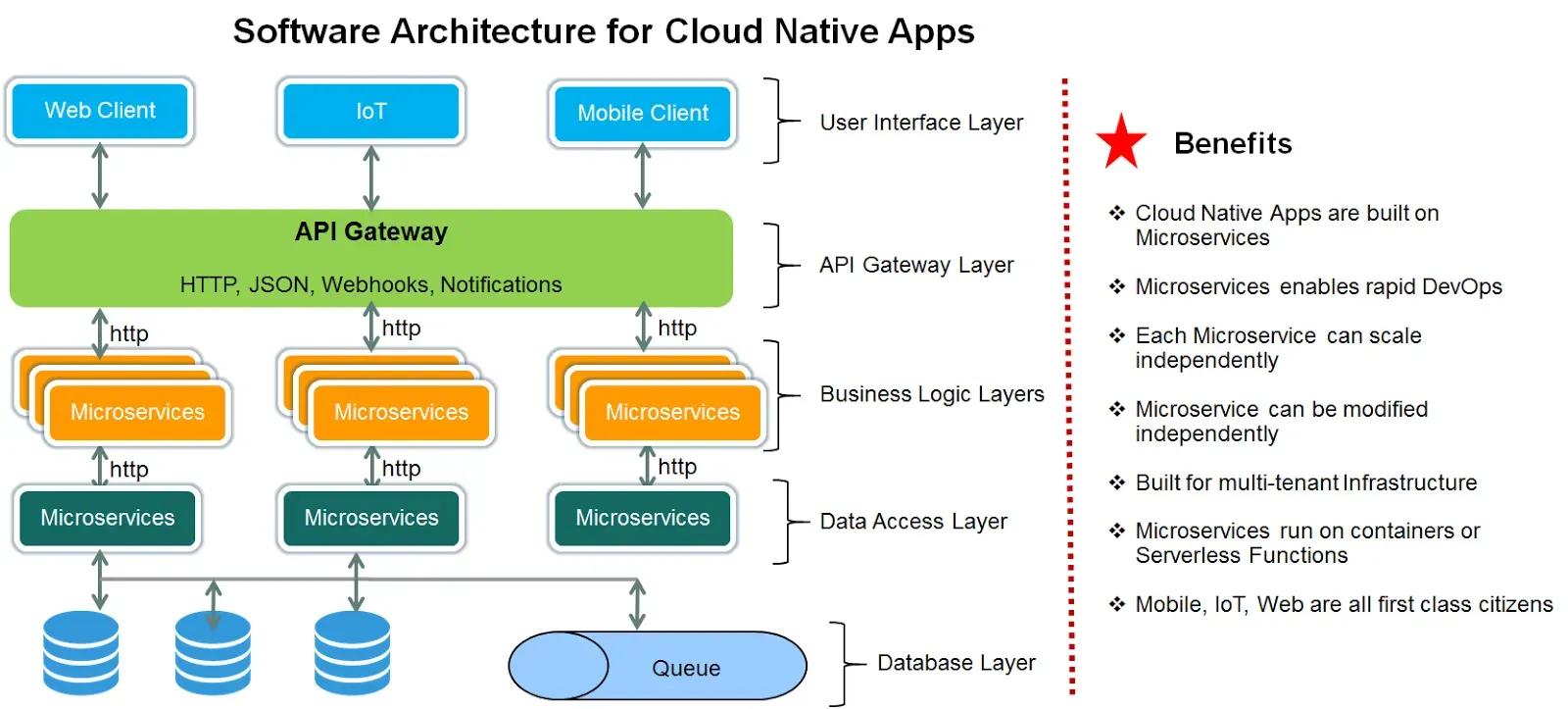
Cloud-Native Software Design represents a modern approach to building applications that thrive in dynamic cloud environments. By embracing cloud-native architecture, teams build systems of scalable microservices that can deploy and scale independently. This approach emphasizes resilience, automated deployments, and strong observability to map behavior and detect issues quickly. This strategy also relies on cloud-native patterns and automation to balance speed with reliability across services. In practice, it means designing portable, resilient infrastructure that embodies resilient cloud design and delivers consistent user experiences even as demand grows.
In other terms, this approach translates into a modern cloud-native architecture that prioritizes containerized workloads and declarative infrastructure. Software is viewed as a collection of modular services that can scale horizontally, communicate through well-defined interfaces, and rely on automated pipelines for delivery. From a holistic standpoint, the field aligns with cloud-based design, emphasizing security, resilience, and proactive monitoring to keep systems healthy. Key patterns such as service meshes, API gateways, and event-driven components enable agile development while supporting observability and reliability.
Cloud-Native Software Design: Principles for Scalable and Resilient Applications
Cloud-Native Software Design represents a strategic approach to building applications that thrive in dynamic cloud environments. It centers on scalable microservices, containerized workloads, and the cloud’s elasticity to maintain consistent user experiences under varying load. By treating services as modular, independently deployable units, teams can accelerate delivery while preserving reliability through well-defined interfaces and boundary contracts.
Implementing this design involves embracing cloud-native patterns, using declarative infrastructure as code, and leveraging orchestration platforms like Kubernetes to automate deployment, scaling, and healing. Observability becomes foundational rather than optional, with structured metrics, log aggregation, and distributed tracing guiding performance tuning, capacity planning, and incident response. Security is integrated from the outset with policy-driven controls and secure service-to-service communication.
Cloud-Native Architecture, Observability, and Resilient Cloud Design
In practice, cloud-native architecture unites development and operations around containerized services, declarative infrastructure, and event-driven communication. Observability is embedded; teams collect metrics, logs, and traces to reveal system behavior under peak load, enabling proactive tuning and faster MTTR. This approach supports both cloud-native patterns and scalable microservices by ensuring each component can be observed and optimized independently.
To realize resilient cloud design, teams apply patterns that protect performance and reliability. Circuit breakers, retries with exponential backoff, timeouts, and idempotent operations help contain failures. Bulkheads isolate components, while chaos engineering experiments, cross-region failover, and robust disaster recovery planning safeguard data and service continuity. By combining cloud-native patterns with automated deployments and continuous testing, organizations can maintain high availability while controlling cost and complexity.
Frequently Asked Questions
What is cloud-native software design, and how does it support scalable microservices and observability in the cloud?
Cloud-native software design is a cloud-first approach that emphasizes containerized services, declarative infrastructure, and automated deployments. It enables scalable microservices by keeping components stateless, externalizing state, and using horizontal scaling, load balancing, and health checks to grow capacity without downtime. Observability is central: collect metrics, logs, and traces to diagnose issues quickly and optimize performance, while resilient design—using retries, timeouts, circuit breakers, and bulkheads—limits fault impact. Tools like Kubernetes and service-mesh platforms provide portability and automation across environments.
What cloud-native patterns and design principles help achieve resilient cloud design and reliable deployments?
Key cloud-native patterns include API gateways, service meshes, and event-driven architectures that enable loose coupling and composable services. For resilience, apply circuit breakers, retries with exponential backoff, timeouts, bulkheads, and cross-region disaster recovery to minimize blast radius. Observability and security are built in: instrument services for metrics, logs, and distributed tracing; implement encryption in transit and at rest; and codify security policies to ensure compliance. Deployment strategies such as blue/green, canary releases, and feature flags, together with automation via CI/CD, support reliable, scalable deployments across regions.
| Topic | Key Points | Notes / Examples |
|---|---|---|
| Overview | Modern approach for cloud environments; scales with demand; handles failures; leverages cloud elasticity; blends architecture, operations, and development; emphasizes portability, automation, and observability. | Describes the motivation and goals of cloud-native design, including its mindset across services and platforms. |
| Core Definition | Runs in the cloud (vendor-agnostic); containerized services; declarative infrastructure; automated deployments; microservices as independent units; modular, observable, resilient; clear service boundaries. | Focuses on how the software is built for cloud execution and interoperability between services. |
| Key Principles | Containers & Kubernetes; declarative configurations; infrastructure as code; continuous delivery; observability is essential; security baked in from the start. | Foundational practices that enable repeatable, secure, and observable deployments. |
| Scalability | Horizontal scaling; stateless components; externalized state; automated scaling policies; health checks; load balancing; cloud-native data stores (distributed caches, sharded databases, event pipelines). | Design considerations for handling increasing load while maintaining performance and low latency. |
| Resilience | Circuit breakers; exponential backoff retries; timeouts; idempotent operations; bulkheads; chaos engineering; disaster recovery; cross-region failover. | Strategies to limit blast radius from failures and recover quickly. |
| Patterns | API gateways; service meshes; event-driven architectures; asynchronous communication; observability patterns; zero-trust, encryption, and policy-as-code security patterns. | Reusable solutions to common cloud-native problems and security practices. |
| Tooling & Platforms | Kubernetes as orchestration; portability of containers; serverless options for event-driven tasks; observability tooling (dashboards, logging, tracing). | The ecosystem and platforms that enable cloud-native design and monitoring. |
| Deployment & Runtime | Continuous delivery with safe deployment practices (blue/green, canary, feature flags); resource requests/limits; autoscaling; multi-region deployments; data partitioning. | Runtime considerations to balance performance, cost, and reliability. |
| Microservices vs Serverless | Balance between independence and coordination: microservices vs serverless; many use a hybrid approach. | Guidance on choosing patterns based on workload characteristics. |
| Observability & Security | Telemetry across metrics, logs, and traces; secure development lifecycle; vulnerability scanning; policy-driven security; automated compliance; secret management. | Security and visibility are integral to cloud-native systems. |
| Practical Guidance | Start small with observable services; invest in CI/CD, automated testing, monitoring; align with business goals; culture of experimentation; gradual adoption of patterns. | Actionable steps for teams to begin and mature their cloud-native journey. |
| Conclusion | Cloud-Native Software Design empowers organizations to build scalable, reliable applications in cloud environments. | A closing summary tying together the benefits and practices of cloud-native design. |
Summary
Below is an HTML table that summarizes the key points of the provided Cloud-Native Software Design content, followed by a descriptive conclusion optimized for SEO.