
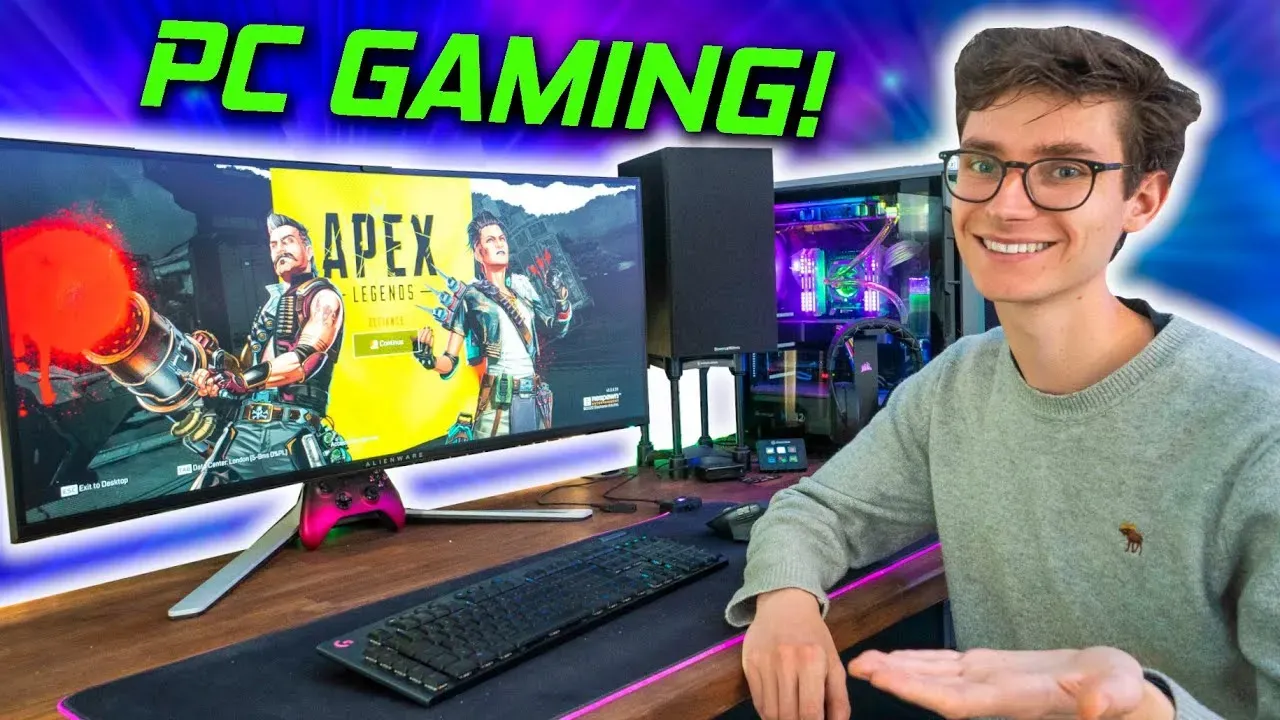
If you're stepping into PC gaming for the first time, this Beginner's guide to PC games offers a friendly map for new players. From a solid PC gaming setup for beginners to practical PC games settings optimization, you'll learn how to build comfort and stability. The guide also covers practical tips on how to win at PC games while keeping expectations realistic for newcomers. You'll discover beginner-friendly titles and genres, including the best beginner PC games that teach core mechanics without overwhelming you. Plus, you'll pick up essential PC gaming tips for beginners to keep improving and enjoying every session.
From another angle, beginners can think of this as getting started with desktop gaming and building a comfortable, reliable rig for play. Think of it as learning the language of graphics, controls, and performance tuning in a way that avoids overwhelm. Starting points include entry-level games that teach mechanics, routines that support practice, and a plan to gradually expand your library. By focusing on sensible settings adjustments, frame rate consistency, and ergonomic input, you lay a foundation for lasting enjoyment and steady improvement. As you explore, community resources, tutorials, and practice habits become your allies on the journey from novice to confident PC gamer.
Beginner's guide to PC games: Setup, titles, and fundamentals for new players
Starting PC gaming can feel daunting, but a clear starting point helps you gain momentum quickly. This beginner-friendly path emphasizes practical, tested steps to get you up and running smoothly, with comfort in mind and a mindset geared toward steady improvement. You’ll learn how to approach a basic PC gaming setup for beginners, how to tune in-game settings without overthinking, and how to build confidence through gradual progress that leads to real wins.
A solid start hinges on a thoughtful PC gaming setup for beginners. You don’t need the most expensive rig to enjoy a wide range of titles; you just need sensible choices that deliver reliable performance and fewer headaches. Prioritize a modern multi-core CPU, a capable GPU, and 8–16 GB of RAM, plus an SSD for faster load times. This combination keeps you comfortable at 1080p with decent detail and smooth gameplay.
When you’re ready to choose games, start with the best beginner PC games that teach core mechanics without overwhelming complexity. Accessible picks across puzzle, platformer, sandbox, and strategy genres help you learn essential skills and experiment with different playstyles. Titles like Portal 2, Minecraft, and Stardew Valley are popular starting points that also align with the idea of PC gaming tips for beginners.
As you gain confidence, you’ll refine your preferences and expand your library. The goal is to practice with forgiving titles that reinforce fundamentals, encourage experimentation, and build a steady foundation for more challenging experiences.
How to win at PC games: Essential strategies, settings optimization, and practice routines
Winning isn’t only about finishing first; it’s about enjoying the process and improving over time. This section outlines practical strategies to help you win more often, even as a novice. Focus on fundamentals, deliberate practice, and learning from others to build a reliable path toward better performance and more consistent wins.
A core element of improving is mastering PC games settings optimization. Start with a baseline—resolve at 1080p, assess your refresh rate, and then tune frame rates, V-Sync, and visual quality in a way that balances responsiveness with visuals. Adjust textures, shadows, and post-processing gradually, aiming for a smooth, playable experience that doesn’t sacrifice your ability to react quickly.
Putting theory into practice, the best way to learn is through deliberate routines and community learning. Establish a pre-game warm-up, track improvements, and study maps or mechanics from players slightly above your level. These PC gaming tips for beginners help you stay motivated, reduce frustration, and steadily raise your average performance, bringing more frequent, satisfying wins.
Frequently Asked Questions
In the Beginner's guide to PC games, how should a newcomer approach the PC gaming setup for beginners and start learning effectively?
Start with a simple PC gaming setup for beginners: a modern multi-core CPU, a capable GPU, and 8–16 GB RAM. An SSD for faster loads, a 60 Hz monitor, and a comfortable keyboard/mouse or gamepad help a lot. Keep Windows and graphics drivers up to date. Use the guide's recommended beginner titles (best beginner PC games like Portal 2, Minecraft, Slay the Spire, Stardew Valley) to learn core mechanics without overwhelm. Begin at 1080p/60 FPS and tweak settings gradually as you learn. This mirrors the approach in the Beginner's guide to PC games.
How to win at PC games according to the Beginner's guide to PC games, and how do PC games settings optimization and the recommended best beginner PC games support that path?
To win at PC games as a beginner, focus on fundamentals and deliberate practice: learn core mechanics, train in short focused sessions, and study maps and timing by watching skilled players or guides (PC gaming tips for beginners). Apply PC games settings optimization by balancing frame rate and visuals—start at 1080p, cap frame rate to your monitor, and adjust textures/shadows and post-processing gradually. The guide also highlights best beginner PC games to practice these skills and build confidence.
| Section | Key Points | Practical Tips |
|---|---|---|
| Introduction | Provides practical, tested steps to get started; focuses on setup, in-game settings, and building confidence to tackle many titles. | Follow a clear starting point; aim for comfort, learn core mechanics, progressively try varied games. |
| PC gaming setup basics | You don't need an expensive rig; sensible choices improve performance; baseline: mid-range GPU + 12–16 GB RAM; 1080p with decent detail. | Consider SSD for OS/Games; use a 60 Hz+ monitor; ergonomic input; keep Windows/drivers updated; use power plans balancing performance and efficiency. |
| Choosing games | Start with approachable titles across genres to learn fundamentals without overwhelm. | Pick games that teach mechanics and remain forgiving; examples include Portal 2, Minecraft, Slay the Spire, Stardew Valley, Forza Horizon 4. |
| Tuning settings | Graphics and performance adjustments improve enjoyment and competitiveness. | Start at 1080p; cap frame rate to monitor; adjust visuals (shadows, reflections) for FPS; fine-tune anti-aliasing; reduce motion blur; consider HDR if display supports it. |
| Winning strategies | Focus on fundamentals, deliberate practice, learning from others, mastering controls, map awareness, adaptability, and resource management. | Short, focused practice sessions; use training modes; watch streams/guides; customize controls; study maps and routes. |
| Skills and routines | Develop habits through pre-game routines, progress tracking, community involvement, and balanced practice. | Run a quick pre-check of drivers/controls; log improvements; join communities; balance tutorials, practice, and casual play. |
| Putting it all together | Illustrates a sample beginner-friendly play through timeline to build confidence and skills. | Follow a structured schedule: set up, learn core mechanics, watch learnings, practice variations, track progress. |