
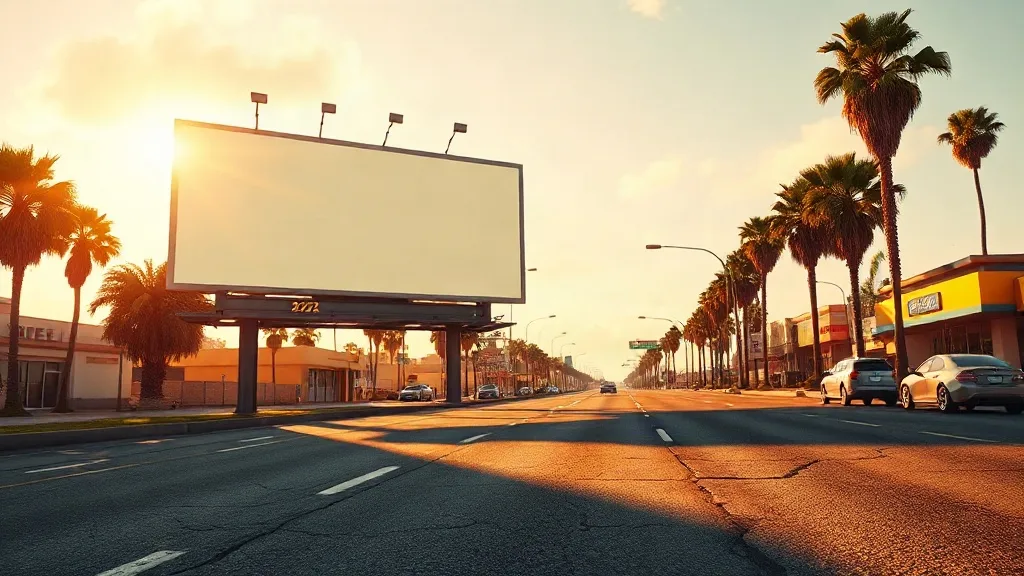
Rockstar has a long history of hiding things in plain sight, and the Peewees billboards in GTA 6 look like the studio is leaning into that habit again. On paper they are just adverts for a fictional brand, the kind of background dressing that fills the edges of any open-world city. In practice, they are the entry point for a puzzle chain that, if you follow it properly, pays out a grand prize. That combination of scavenger hunt and in-world marketing is exactly the sort of thing players will spend a weekend arguing about on forums.
What makes this worth paying attention to is not the reward itself. It is the structure. A billboard is a static object. It does not move, it does not chase you, and it does not require reflexes. Turning one into a puzzle piece means the game is asking you to read the world rather than fight it. For a series that has spent years refining shootouts and car chases, that is a meaningful shift in how exploration gets rewarded.
What the Peewees billboards actually are
Peewees appears to function as a fictional business with a presence across the map, and its billboards serve as the visible layer of a larger challenge. Each board carries its own visual information, and the puzzle only resolves once you have engaged with the set rather than a single sign. The source material is clear on the payoff: the billboards lead to a grand prize, and there is a defined process for solving the puzzle and claiming the reward.
That framing matters because it tells us what kind of content this is. It is not a collectible in the traditional sense, where you sweep the map with a checklist and tick boxes. It is closer to an environmental riddle. You are meant to notice something, compare it with something else, and draw a conclusion. The billboards are the question. The prize is the answer.
Why a billboard hunt fits GTA 6's setting
Leonida is built on advertising. Florida's real-world counterpart is a place where highway signs, motel marquees, and roadside attractions compete for attention, and a fictional brand plastered across that landscape feels native rather than inserted. Rockstar has always used in-world ads for satire, but using them as puzzle infrastructure is a different move. It turns the scenery into a mechanic.
There is also a practical benefit for players. Billboards are easy to spot from a distance and easy to revisit. That makes them a forgiving puzzle format. If you miss a detail on your first pass, you can drive back. Nothing is lost. Compare that with timed events or one-shot encounters, and the appeal becomes obvious.
How the puzzle loop is structured
Based on what has been described, the loop follows a recognizable pattern. You find a Peewees billboard, you extract whatever information it presents, and you use that information in combination with the other boards to reach a solution. Once solved, the reward becomes claimable. The exact steps are the part players will need to work out in-game, but the shape of the challenge is consistent with how Rockstar has handled similar mysteries before.
What is worth flagging is that this is a multi-location puzzle, not a single-sign secret. That means the order in which you encounter the boards may matter, or the boards may need to be cross-referenced against each other. Either way, the design encourages players to treat the map as a whole rather than a series of isolated stops.
Reading a billboard properly
Most players will glance at a sign and move on. For this hunt, that habit works against you. A few things are worth checking every time you pull up to a Peewees board:
- The main image and any secondary visual elements, since puzzle clues are often hidden in what looks like decoration.
- Text on the board, including small print that would normally be ignored.
- The board's surroundings, because context sometimes carries as much information as the advert itself.
- Whether the board looks different from other Peewees boards you have already seen, since variation is usually the point.
Taking a screenshot each time is a simple habit that pays off later. If the puzzle requires comparison, having a record beats trying to remember a detail from twenty minutes of driving ago.
Planning your route instead of wandering
The instinct with any location-based hunt is to drive until something turns up. That works, but it is slow. A better approach is to treat the billboard hunt as a route-planning exercise. Billboards sit along major roads and highways by design, because that is where advertisers want them. If you follow the main arteries of the map rather than cutting through back streets, you will cover more candidate locations per hour.
It also helps to work in sections. Pick a region, clear it, then move on. Returning to a district you half-explored is one of the fastest ways to lose momentum, and the puzzle rewards completeness over speed.
What to do when you find one
- Stop the car and get out. Some details are easier to read on foot.
- Screenshot the board from a straight-on angle.
- Note the location so you can return without hunting for it again.
- Check whether the board references anything you have seen elsewhere in the world.
- Move on, but keep the detail in mind for later comparison.
That last step is the one people skip. The value of a billboard is not always clear the moment you see it. Sometimes it only makes sense once you have seen three others.
Why this kind of content spreads
Puzzle hunts have become a genre of their own in big open-world releases, and there is a reason for that. They generate conversation. A billboard is not a boss fight, so the discovery process becomes communal. Players compare notes, argue about interpretations, and gradually converge on a solution. Rockstar benefits from that cycle because it keeps the game in circulation long after the main story is finished.
There is a risk, of course. If the puzzle is too obscure, most players will simply look up the answer and skip the experience entirely. If it is too obvious, it stops being a puzzle. The Peewees hunt sits somewhere in the middle by design, which is probably the right call. The grand prize needs to feel earned, but it also needs to be reachable by someone who is paying attention rather than reading a guide.
The bigger picture for GTA 6's world design
Billboard puzzles are a small feature in the context of a game this size, but they signal something about priorities. A studio does not build a multi-location riddle around a fictional brand unless it wants players to slow down and look at the environment. That is a deliberate choice in a game that will also let you drive at full speed past everything.
For players, the takeaway is straightforward. Treat the Peewees boards as worth a second look. Note what you see, keep a record, and do not assume the advert is only an advert. The reward is real, but the more interesting part is what the hunt asks you to do along the way.
Frequently asked questions
Do I need to find every Peewees billboard to get the prize?
The puzzle is built around the billboard set as a whole, so the safe assumption is that you should engage with all of them rather than a single sign. Skipping boards risks missing the information the solution depends on.
Can the Peewees puzzle be solved without a guide?
Yes, provided you are systematic. The challenge is designed around observation and comparison rather than obscure inputs, so a player who screenshots each board and reviews the details carefully has a genuine path to the answer.
What happens after I solve the puzzle?
Solving it unlocks the process for claiming the grand prize. The reward is tied to completing the puzzle chain, not to simply visiting the locations, so the final step matters as much as the discovery phase.
Are the billboards missable?
Billboards are fixed objects in the world, which makes this a forgiving hunt. You can return to a board at any time, so nothing is permanently lost if you drive past one without stopping.
Is it worth doing the Peewees hunt early in the game?
It depends on how you like to play. Doing it early gives you a reason to learn the map and its road network. Leaving it for later means you will already know the terrain, which makes the route planning considerably faster.